Quick answer
Metal keychain plating is a thin metal layer applied over the base metal to give color and protection. Common finishes include gold, silver or nickel, antique, black nickel and rose gold, each available shiny or matte. The finish changes the style of your keychain and can affect price, so choose it alongside your logo method and enamel colors.
Metal keychain plating is one of the biggest decisions in a custom metal keychain order, yet many buyers only think about it at the mockup stage. The same design can look classic, vintage, modern or luxurious depending on the plating color and whether the surface is shiny or matte.
This guide explains the most common plating options, how matte and shiny finishes differ, which finishes suit enamel or engraved logos, and how your choice affects appearance, durability and price. It is written for brands, retailers, clubs and promotional distributors ordering metal keychains in bulk.
What Is Metal Keychain Plating?
Most custom metal keychains are made from a base metal, commonly zinc alloy or iron, shaped by die casting or stamping. Plating adds a thin layer of another metal or color over that base. It does three jobs:
- Appearance: gives the keychain its gold, silver, black or rose tone.
- Protection: helps resist tarnish and everyday wear.
- Contrast: frames enamel colors and makes raised or recessed logo details stand out.
Plating is applied after the keychain is cast or stamped and polished, and before enamel colors are filled or the item is finished. You can see examples across our metal keychain range.
Common Metal Keychain Plating Options
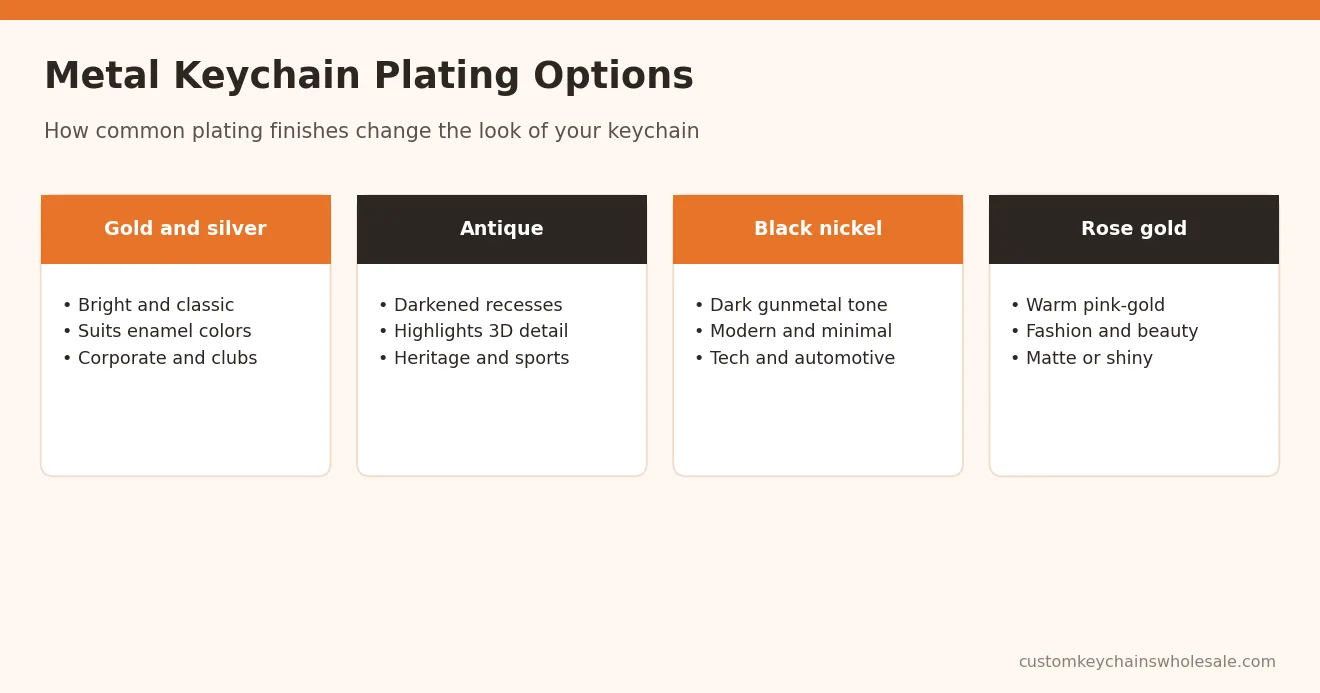
The table compares the finishes buyers ask for most often. Exact shades vary between production batches and suppliers, so always approve a mockup and, for important orders, a physical sample.
| Plating | Look | Works well with | Typical use |
|---|---|---|---|
| Shiny gold | Bright, premium, classic | Enamel colors, awards | Corporate gifts, clubs |
| Shiny silver / nickel | Clean, bright, neutral | Any enamel color | Everyday promo, retail |
| Antique gold / silver / bronze | Vintage, darkened recesses | Raised detail, 3D designs | Heritage, souvenirs, sports |
| Black nickel | Dark, modern, gunmetal tone | Bright enamel, minimal logos | Tech, automotive, streetwear |
| Rose gold | Warm pink-gold, fashionable | Pastel enamel, lettering | Beauty, fashion, gifts |
| Dual plating | Two metal tones on one piece | Layered or detailed logos | Premium collectors’ items |
Not every finish suits every design, so ask your supplier to recommend two options for your artwork.
Matte vs Shiny Finishes
Most plating colors can be produced with a shiny, polished surface or a matte, satin or sandblasted texture:
- Shiny: reflective and eye-catching. Ideal for enamel keychains where bright metal lines separate colors. Shows fingerprints and fine scratches more easily.
- Matte or satin: soft, understated and modern. Hides fingerprints and light wear better. Popular with tech, design and luxury brands.
- Sandblasted areas: a textured background combined with polished raised areas creates contrast without adding color.
Combining matte and shiny areas on one keychain is an effective way to make a single-color metal logo look more detailed.
Antique Finishes and 3D Designs
Antique plating darkens the recessed areas while the raised areas are polished bright. This highlights texture and depth, which is why antique finishes are popular for 3D sculpted designs, crests, coins and heritage logos.
Antique finishes are usually chosen without enamel colors or with only a few, so the metal detail carries the design. For clubs and teams, antique silver or bronze gives a medal-like look that suits commemorative keychains and anniversary gifts. If your artwork has fine textures such as hair, fur or fabric patterns, antique plating will usually show them more clearly than a flat shiny finish.
Pairing Plating With Enamel Colors and Logos
Plating and enamel colors work as a pair, so plan them together rather than separately. The metal lines between enamel areas take the plating color, which changes how the whole palette reads.
- Gold plating warms up reds, navy and black, giving a traditional, award-style look.
- Silver or nickel keeps colors true and neutral, so it suits brand palettes that must stay accurate.
- Black nickel makes bright colors such as neon, white and pastel shades stand out strongly.
- Rose gold pairs naturally with pink, cream, mint and other soft tones.
- Antique finishes usually work best with few or no enamel colors.
For engraved logos, the plating is what the engraving cuts through, so contrast matters. Engraving on black nickel or a colored coating usually shows more clearly than engraving on shiny silver. Ask to see your logo on two plating colors in the mockup before deciding.
How Plating Affects the Price of Metal Keychains
Plating is one of several factors in unit price. Others include size, mold complexity, enamel color count, logo method, attachment, packaging and quantity. As general guidance:
- Standard finishes such as shiny silver or nickel are usually the simplest.
- Gold-tone, rose gold, black nickel and antique finishes may involve extra process steps.
- Dual plating or mixed matte and shiny areas add handling and masking work.
- Larger and thicker keychains have more surface area to plate.
- Small quantities spread setup work over fewer pieces.
We do not publish fixed prices because every design is different; instead, ask for two plating options on the same quote to compare. Our bulk cost guide explains the other price drivers.
Durability and Care
Plating is a surface layer, so heavy daily friction against keys and coins will eventually show some wear on any metal keychain. Good production practice, appropriate plating and finishing for the design help it look good for longer.
- Keep keychains dry where possible and wipe them with a soft cloth.
- Avoid harsh chemicals, perfumes and abrasive cleaners.
- Choose matte or antique finishes if wear and fingerprints are a concern.
- Store retail stock in individual polybags so pieces do not rub together.
Ask for plating and finishing to be included in inspection. Our quality inspection checklist explains how to check color, plating and edges before shipment.
Choosing the Right Finish for Your Brand
- Corporate and awards: shiny gold or silver with enamel colors.
- Heritage, souvenirs and sports: antique silver, gold or bronze for depth.
- Tech and automotive: black nickel or matte silver for a modern look.
- Fashion and beauty: rose gold or matte gold with soft enamel colors.
- Collectors’ editions: dual plating or mixed matte and shiny areas.
If you are still choosing between materials, our comparison of PVC vs acrylic vs metal keychains can help. For metal options and processes, visit our custom metal keychains page.
Get a Quote for Custom Metal Keychain Plating
Send us your logo or design, target size, preferred plating and finish, enamel colors, quantity and packaging needs. If you are unsure which plating to choose, tell us your brand style and we will suggest options.
We will prepare a free digital mockup and a quote. Contact us today to start your custom metal keychain order. MOQ usually starts from 100 pcs depending on material and design; confirm per quote.
Frequently Asked Questions
What is the most popular plating for metal keychains?
Shiny silver or nickel and shiny gold are the most common choices because they suit most enamel colors and logos. Antique finishes are popular for 3D and heritage designs, while black nickel and rose gold are often chosen for modern, fashion or tech brands. Your mockup can show two options side by side.
What is the difference between matte and shiny plating?
Shiny plating is polished and reflective, making enamel colors and metal lines stand out, but it shows fingerprints and fine scratches more easily. Matte or satin plating has a soft, understated surface that hides light wear better. Many designs combine both, using matte backgrounds and shiny raised areas for contrast.
Does plating color change the price of a metal keychain?
It can. Standard finishes such as shiny silver or nickel are usually the simplest, while rose gold, black nickel, antique, dual plating or mixed matte and shiny areas may involve extra steps. Size, enamel colors, mold complexity and quantity also affect price, so ask for two plating options on one quote.
Will the plating on my keychain wear off?
Plating is a surface layer, so heavy friction against keys and coins will eventually show some wear on any metal keychain. Appropriate plating and finishing, matte or antique finishes and simple care such as keeping keychains dry help them look good for longer. Include plating in your pre-shipment inspection.
What is antique plating?
Antique plating darkens the recessed areas of a metal keychain while the raised areas are polished bright. This highlights texture and depth, giving a vintage or medal-like look. It suits 3D sculpted designs, crests, coins and heritage logos, and is often used with few or no enamel colors so the metal detail carries the design.