If you plan to resell custom keychains, choosing the right design is only part of the job. The other part is pricing the product in a way that supports both sales and profit.
Many buyers make the mistake of asking only one question at the beginning: “How much does the keychain cost to make?” That matters, of course, but manufacturing cost alone does not tell you whether the product will work as a resale item. A keychain that looks inexpensive at the factory level may become much less attractive once packaging, shipping, and selling requirements are added. On the other hand, a product with a slightly higher factory cost may still be the better choice if it creates stronger perceived value and supports a better selling price.
That is why buyers who plan to resell custom keychains need to think in terms of product economics, not just unit price.
If you are sourcing keychains for retail, e-commerce, Amazon private label, event resale, or branded merchandise, this guide explains how to think about cost, margin, packaging, and wholesale strategy before you place a bulk order.
Need help evaluating your resale project? Send us your design, target quantity, preferred material, packaging needs, destination country, and deadline. We will help you choose the most practical product structure for resale.
Why resale pricing matters from the beginning
Resale pricing should be considered before the order is placed, not after the products arrive.
That is because every early sourcing decision affects the final margin. Material choice changes factory cost and perceived value. Packaging affects both presentation and shipping. Quantity affects unit economics. Shipping changes landed cost. Even the intended sales channel can influence whether the product needs to be more premium, more giftable, or more cost-efficient.
A keychain that works as a low-cost giveaway may not work as a paid retail item. A product that sells well in a local gift shop may need different packaging from one sold online. An Amazon item may need a different balance between packaging and margin than a product sold at a school fundraiser or event booth.
The better your pricing logic is at the beginning, the less likely you are to end up with a product that looks good but performs poorly as a business item.
What costs should buyers include when pricing custom keychains for resale?
Resale pricing should be based on total project cost, not only the product quote.
The first layer is the product itself. This includes the material, size, thickness, design complexity, accessory type, and any finishing choices. These are the obvious manufacturing factors.
The second layer is packaging. Packaging can be simple or highly customized, but either way it changes the commercial structure of the product. A bulk-packed promotional keychain and a retail-ready packaged keychain are not the same business item.
The third layer is shipping. Shipping matters because it affects the true landed cost of the product. Even a lightweight keychain can become more expensive to deliver if the packaging is bulky, the order is urgent, or the destination creates higher logistics costs.
The fourth layer is channel suitability. Some products need a stronger retail presence. Some need better presentation for gifting. Some need a cleaner structure for e-commerce or private label.
When buyers think only about the manufacturing quote, they often underestimate how much these other factors shape the real resale economics.
Why unit cost alone does not tell the full story
A lower unit cost does not automatically mean a better resale product.
A cheap-looking keychain may be easier to source, but if customers do not see enough value in it, the product may struggle to sell at a healthy margin. On the other hand, a product with a slightly higher factory cost may support better presentation, stronger visual appeal, and a more convincing retail price.
This is one of the most important ideas in resale strategy. Buyers are not just choosing what costs less. They are choosing what sells more effectively at the intended price point.
A strong resale product usually needs the right combination of acceptable cost, clear customer appeal, and enough perceived value to justify the asking price.
That is why sourcing decisions should be based on value structure, not simply on the lowest quote.
How material affects resale pricing
Material choice is one of the biggest factors in resale strategy because it changes both cost and perceived value.
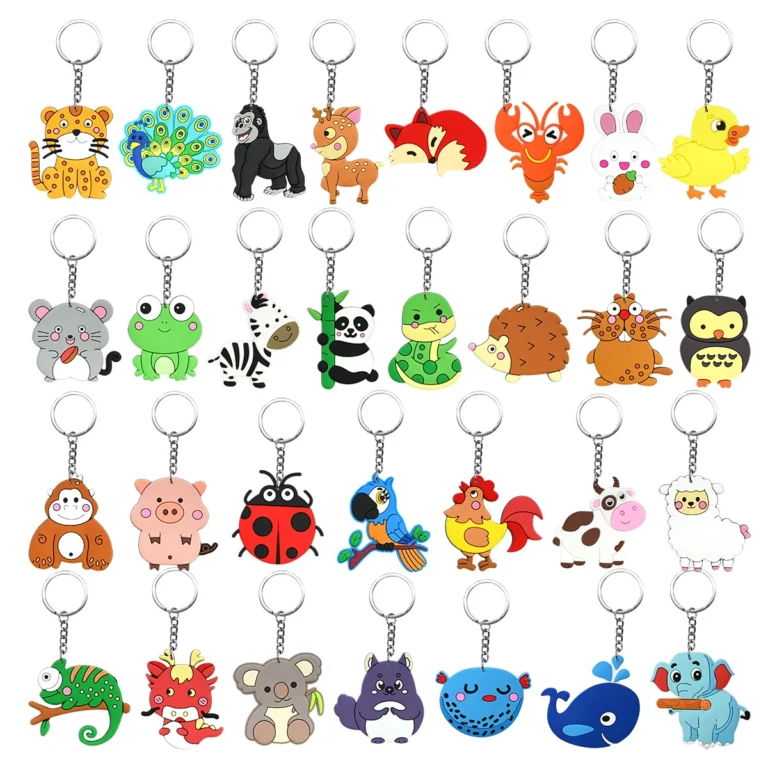
PVC keychains are often useful for colorful, lower-cost products with strong appeal in schools, events, clubs, youth markets, and fun branded merchandise. They can work well when the resale model depends on accessible pricing and visual character.
Acrylic keychains are often suitable for artwork-based products, creator merchandise, anime-style goods, graphic designs, and lighter retail concepts. They can support visually appealing resale products when the design itself is the main attraction.
Metal keychains usually work better when the resale product needs stronger perceived value. They are often better suited to automotive themes, executive gifting, boutique retail, souvenir items, and premium branded merchandise.
Leather keychains can also support more refined positioning, especially for lifestyle brands and boutique-oriented sales.
The important point is that material should match the target selling price and audience expectation. A mismatch between material and market often makes resale pricing harder.
How packaging affects resale margin
Packaging can either strengthen your margin strategy or weaken it.
For resale products, packaging is not only about protection. It also influences how customers perceive the product. A retail-ready keychain with clean presentation can feel far more valuable than the same item packed too simply. At the same time, overbuilt packaging can increase cost without improving sales enough to justify the difference.
This is why buyers should treat packaging as part of pricing strategy. The goal is to create enough presentation value to support the selling price without damaging margin.
A simple product sold in a school shop may only need practical branded packaging. A boutique gift item may need a more refined presentation. An e-commerce product may need packaging that balances unboxing appeal with shipping efficiency.
The best packaging is not always the fanciest. It is the one that supports the channel and the target customer.
How quantity changes resale economics
Quantity matters because it can improve or limit your margin structure.
In many wholesale projects, larger quantities reduce the unit cost because setup and preparation costs are spread across more pieces. This can improve the economics of resale, especially if the product already has proven demand.
However, bigger is not always better. A larger order also means more cash tied up in inventory and more pressure to sell through the product efficiently. For smaller brands or early-stage sellers, a smaller order with a slightly higher unit cost may still be the better commercial decision if it reduces risk.
This is why good resale planning includes both cost efficiency and inventory logic. The ideal quantity is not simply the one with the lowest unit cost. It is the one that gives you a workable balance between margin and realistic sell-through.
How should retailers price custom keychains?
Retailers should price custom keychains based on how the product fits their store, audience, and merchandising style.
A gift shop, school store, boutique retailer, museum store, tourism outlet, or club shop may all sell keychains, but the logic behind pricing can be different. In one setting, the keychain may function as an affordable impulse purchase. In another, it may need to feel giftable or collectible.
Retailers should think carefully about the role of the product. Is it a low-cost add-on item, a branded souvenir, a small-margin volume product, or a more premium accessory? The answer affects how much packaging, material value, and design detail the product should carry.
The best retail price is the one that makes sense to the customer in that specific environment.
How should e-commerce sellers price custom keychains?
E-commerce sellers should think about resale pricing together with niche appeal, visual presentation, and delivery experience.
Online buyers cannot touch the product before purchasing. That means the product has to communicate value through design, photos, packaging cues, and product concept. A keychain that looks too generic may struggle online unless the price is very low. A product with stronger niche identity or better presentation may justify a healthier margin.
This is especially important for custom keychains sold through niche stores, creator shops, or Amazon private label programs. The product must compete not only on cost, but also on relevance and perceived value.
For online resale, pricing strategy is closely connected to product positioning. A better-designed, better-presented product may support a stronger price and better customer response than a cheaper but weaker-looking alternative.
Are cheap custom keychains always easier to resell?
Not necessarily.
Cheap products may sell in some markets, but low cost alone is not a resale strategy. If the product looks weak, generic, or poorly packaged, customers may still not see enough value in it. A slightly better product with stronger design, cleaner packaging, or a more relevant niche angle may perform better even at a higher price.
This is why buyers should be careful about chasing the cheapest factory quote. A resale product needs more than affordability. It needs enough appeal to move in the market where it will be sold.
In many cases, the best resale item is not the cheapest one. It is the one that creates the clearest relationship between cost, customer appeal, and selling price.
How should buyers think about margin without overcomplicating it?
The simplest way is to ask a practical question: after product cost, packaging, and delivery are considered, does the final item still look and feel strong enough to sell at a price that makes the project worthwhile?
This way of thinking keeps the focus on real business logic rather than abstract formulas. If the product feels too basic for the price you would need to charge, the structure may need to change. If the product can support stronger presentation and stronger perceived value without becoming too expensive, the pricing model may improve.
Good margin planning usually comes from making smart sourcing choices early, not from trying to fix a weak product after production.
What kind of keychains tend to work better for resale?
Products that usually perform better for resale often share a few characteristics.
They are visually clear, easy to understand, and relevant to a niche, brand, theme, or audience. They may be giftable, collectible, identity-based, or tied to a specific interest group. They look intentional, not random. Their packaging fits the channel. Their design supports the price.
This is why niche products often outperform generic ones. A custom keychain for a sports club, school, brand, pet niche, creator audience, local souvenir market, or themed event often has a stronger resale story than a plain unpositioned design.
Resale works best when the product feels like it belongs somewhere.
What should buyers send when asking for a resale quote?
If you want a useful wholesale recommendation for resale, the supplier needs enough information to understand the business purpose of the order.
The first inquiry should usually include:
- Your design, logo, or reference image
- Target quantity
- Approximate size
- Preferred material
- Intended sales channel, such as retail, e-commerce, Amazon, event resale, or gift shop
- Packaging requirements
- Delivery country
- Required timeline
The more clearly the supplier understands the resale plan, the easier it is to recommend a structure that supports both presentation and margin.
Common mistakes buyers make when pricing keychains for resale
One common mistake is focusing only on factory unit cost. That often leads to products that are cheap to source but weak in retail presentation.
Another mistake is overbuilding packaging for a low-price item. If packaging becomes too expensive relative to the product’s role, the margin can become difficult to maintain.
Some buyers also choose materials that do not match the intended price point. A premium retail price needs a product that feels convincing in hand and in presentation.
Another mistake is ordering too much too early. Larger quantities may improve unit cost, but they also increase inventory risk.
A final mistake is treating all channels the same. A keychain sold in a school store, on Amazon, and in a boutique shop should not always be structured the same way.
Frequently Asked Questions
How should I price custom keychains for resale?
You should price them based on total product structure, including material, packaging, shipping, and the sales channel where the product will be sold.
Does better packaging improve resale value?
Often yes. Better packaging can improve presentation and perceived value, but it should still match the product’s price level and channel.
Is the cheapest keychain always the best for resale?
No. A cheaper product may have weaker perceived value, which can make it harder to sell profitably.
What material is best for resale keychains?
It depends on the market. PVC works well for accessible fun merchandise, acrylic is strong for artwork-led products, and metal often suits more premium resale positioning.
What should I send for a resale quote?
Send your design, quantity, material preference, packaging needs, intended sales channel, delivery country, and deadline.
Ready to build a better resale keychain product?
If you are planning to resell custom keychains, the best results come from choosing a product structure that supports both customer appeal and profit. Material, packaging, quantity, and sales channel all shape whether the product works as a business item, not just as a sample.
Send us your design, target quantity, preferred material, packaging requirements, intended sales channel, destination country, and deadline. We will review your project and recommend the most practical wholesale structure for resale.