Quick answer
Keychain molds are the custom tools used to shape PVC keychains or strike and cast metal ones. Mold cost depends on size, shape complexity, number of colors or levels and the process used. Molds are kept for repeat orders, so reorders of the same design are usually simpler and faster than a new design. Changes may need mold modification or a new mold.
Keychain molds are the part of custom production buyers ask about most and understand least. A mold turns your logo into a physical shape, and it is often a one-time setup step that shapes the economics of your first order and every reorder that follows.
This guide explains which keychains need molds, what affects mold cost, how retention and ownership usually work, what to expect when you reorder, and how to handle design changes without starting from scratch. It is written for brands, resellers and distributors planning repeat business rather than one-off orders.
What Is a Keychain Mold?
A keychain mold is a custom tool made for your specific design. Depending on the material, it may be a metal die used to strike or cast metal keychains, or a mold cavity used to form soft PVC keychains with separate color areas.
Not every keychain needs one. Acrylic keychains are usually printed and laser cut, and many fabric keychains are woven or embroidered on machines programmed from your artwork. Some leather keychains use a cutting die or embossing plate rather than a full mold.
| Keychain type | Tooling usually needed | Notes |
|---|---|---|
| Soft PVC (2D / 3D) | Custom mold | Each color area and level is built into the mold |
| Die-struck metal | Stamping die | Suits flat designs with recessed areas for enamel |
| Die-cast metal | Casting mold | Suits 3D shapes and cut-outs |
| Acrylic | Usually no mold | Printed and laser cut from artwork |
| Leather | Cutting die / embossing plate | Depends on shape and logo method |
| Woven or embroidered fabric | Machine setup, not a mold | Program created from artwork |
What Affects Keychain Mold Cost
Mold cost is quoted per design, and several factors influence it. We do not publish fixed figures because each design is different, but the main drivers are consistent:
- Size: larger keychains need larger molds or dies.
- Shape complexity: intricate outlines, cut-outs and fine details take more work.
- 2D vs 3D: 3D sculpted shapes need more tooling time than flat, layered designs.
- Number of colors or levels: on PVC, each color and level is part of the mold design.
- Double-sided designs: two different faces may require more tooling.
Mold cost is one part of the total. For the full picture of unit pricing, read how much custom keychains cost in bulk.
How Mold Cost Fits Into Your Order Economics
Because mold cost is a one-time setup charge, its impact per keychain falls as quantity rises. On a small first order it can be a noticeable part of the budget; on larger or repeat orders it becomes minor.
- Spreading one mold over a larger first order lowers the effective unit cost.
- Using one design across several channels or events maximizes the value of the mold.
- Reorders of the same design usually do not need a new mold.
If you are testing a new product with a small budget, our guide to low MOQ custom keychains explains how to start small sensibly. MOQ usually starts from 100 pcs depending on material and design; confirm per quote.
Mold Retention and Ownership
We keep molds for repeat orders, which means you can reorder the same design without paying for new tooling. Buyers commonly ask a few related questions, and it is sensible to clarify them in writing at the start:
- How long is the mold kept? Ask about the retention policy, especially if your reorders are seasonal or infrequent.
- What happens if no order is placed for a long time? Confirm whether you will be contacted before any mold is retired.
- Is the design used only for your orders? For custom logos and private label work, confirm that your artwork is produced only for you.
- Can the mold be modified? Some changes can be made to an existing mold; others need a new one.
Brands building their own product line should also read our page on private label keychains.
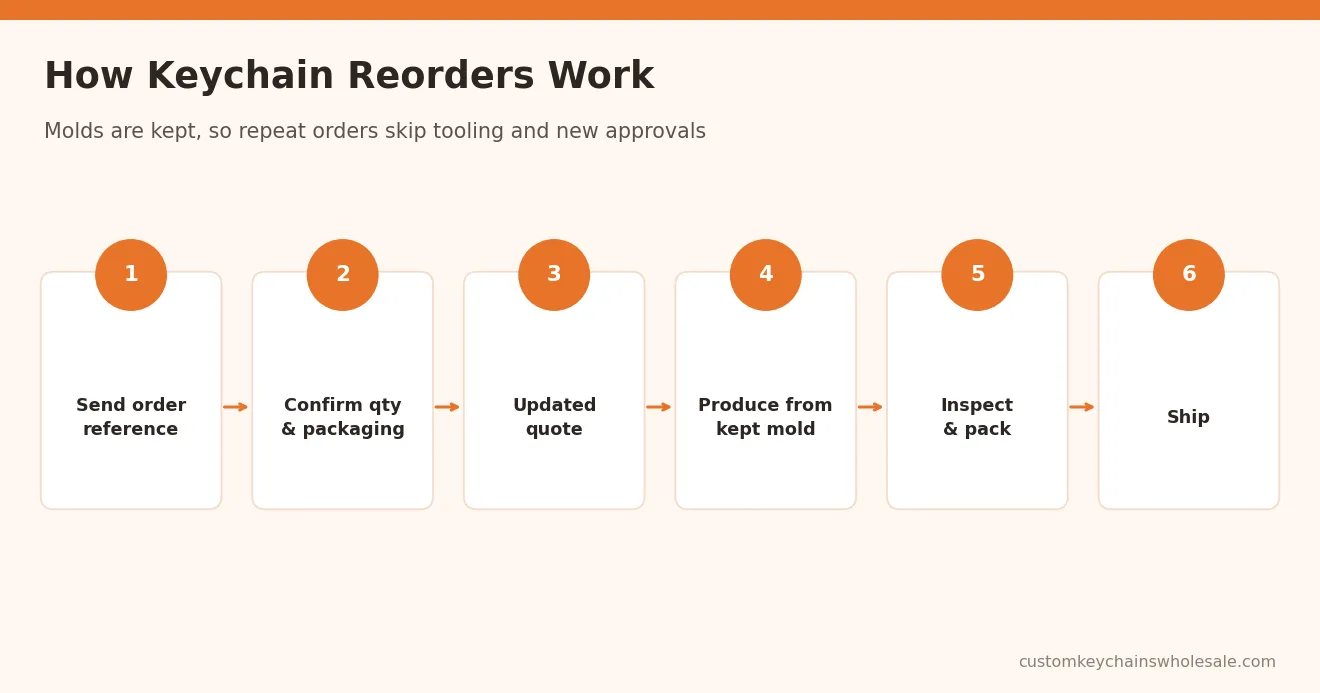
How Reorders Work
A reorder of an existing design is usually simpler than a new order because the mold, artwork and approved sample already exist. A typical reorder involves:
- Sending the previous order reference or a photo of the approved keychain.
- Confirming quantity, colors, packaging and any carton changes.
- Receiving an updated quote.
- Production using the retained mold, followed by inspection and packing.
- Shipping by the agreed method.
Because tooling and approval are already done, reorders are often quicker to move into production than new designs. Exact timing still depends on quantity and the production schedule, so confirm it when you request the quote.
Changing a Design: Modify or Make a New Mold?
Brands evolve, events change names and dates, and buyers often want small updates. Whether the existing mold can be used depends on the change.
Changes that usually do not need a new mold
- Changing color combinations on PVC or enamel within the same separations.
- Changing plating finish on metal keychains.
- Changing attachments, rings, packaging or backer cards.
- Adding a printed element where the process allows it.
Changes that may need modification or a new mold
- Changing the outline or shape.
- Adding, moving or removing raised or recessed details.
- Changing text that is molded or struck into the surface, such as a year.
Send the updated artwork with your previous order details and we will advise which approach applies before you commit.
Tips to Get the Most From Your Molds
- Design evergreen elements, such as your logo, into the mold and keep changeable details like dates printed or on packaging.
- Keep a master file of the approved artwork and a photo of the approved sample.
- Plan reorders before stock runs out so you have time to choose economical shipping.
- Consider a family of designs that share a base shape and differ only in color.
These habits keep reorders smooth and make it easier to scale a successful design across new markets or campaigns.
It also helps to review sales data before each reorder. If one color or variant consistently sells faster, adjust the quantity split rather than reordering the same mix. Because the mold already exists, shifting quantities between color versions of the same design is usually a simple change to discuss at quotation stage.
Get a Quote for Custom Keychain Molds and Reorders
Planning a new design or reordering an existing one? Contact us with your logo or previous order details, preferred material, quantity and packaging needs. We will prepare a free digital mockup and a quote, explain any tooling required, and confirm whether your existing mold can be reused.
Frequently Asked Questions
Do I pay for a mold on every order?
Usually not. Mold cost is normally a one-time charge for a specific design, and molds are kept for repeat orders. Reorders of the same design generally do not require new tooling. If you change the shape or molded details, a modification or new mold may be needed, and this is confirmed before you proceed.
Do acrylic keychains need a mold?
Acrylic keychains are usually printed and laser cut directly from your artwork, so a traditional mold is not normally required. This makes acrylic a flexible choice for small runs, multiple designs or full-color artwork. Soft PVC and metal keychains, by contrast, generally rely on custom molds or dies.
How much does a keychain mold cost?
Mold cost depends on size, shape complexity, 2D or 3D construction, the number of colors or levels and whether the design is double-sided. Because every design is different, we quote mold cost per project. Send your artwork, target size and material to receive an accurate figure.
Can I change the color on a reorder without a new mold?
In many cases, yes. Color changes on PVC or enamel keychains can often use the same mold if the color areas stay the same. Changes to the outline, raised details or molded text may require modification or a new mold. Share your updated artwork and we will confirm the best approach.
Are reorders faster than new orders?
Reorders are often quicker to start because the mold, artwork and approved sample already exist, so there is no tooling or new approval stage. Total timing still depends on quantity, packaging and the production schedule. Confirm the expected timeline when you request your reorder quote.
Get a Wholesale Quote for Custom Keychains
MOQ from 100 pcs per design. Samples in 3–7 days, bulk production in 7–15 days. Send your logo or idea and quantity, and we will reply with a quote.