The best custom keychain for an Amazon private-label seller is one that matches a defined customer niche, can be manufactured consistently, meets packaging and labeling requirements, and leaves enough margin after landed cost and marketplace fees. PVC, acrylic, metal, leather, and fabric designs can all work; the right choice depends on artwork, positioning, weight, durability, packaging, and target price.
This guide explains how Amazon sellers can develop a private-label keychain, compare materials, prepare a supplier RFQ, approve samples, plan packaging, and calculate costs before placing a bulk order. Amazon requirements change, so sellers should always verify current rules in Seller Central for their marketplace and fulfillment method.
What Makes a Good Private-Label Keychain?
- Clear niche fit: the design solves a merchandising need or appeals to a recognizable buyer group.
- Visible differentiation: shape, material, artwork, finish, attachment, or packaging distinguishes it from generic listings.
- Repeatable production: colors, dimensions, print, assembly, and packaging can be controlled across batches.
- Practical economics: landed cost, Amazon fees, advertising, storage, returns, and taxes leave a viable contribution margin.
- Compliant presentation: artwork, claims, packaging, labels, and product details are appropriate for the destination market.
- Efficient fulfillment: product and packaging dimensions are planned with storage and shipping in mind.
Best Custom Keychain Materials for Amazon Sellers
| Material | Useful characteristics | Supplier questions |
|---|---|---|
| PVC | Colorful molded shapes, raised or recessed details, 2D or 3D styling | Color count, thickness, mold, attachment, surface detail, and odor or material requirements |
| Acrylic | Printed artwork, varied shapes, lightweight construction | Print sides, protective film, edge finish, scratch protection, color consistency, and attachment hole |
| Metal | Premium weight, engraving, enamel, plating, and dimensional forms | Base metal, process, plating, enamel, polishing, weight, edges, and corrosion expectations |
| Leather or PU | Gift-oriented presentation, embossing, stitching, mixed materials | Exact material, thickness, edge finish, stitching, logo process, and hardware |
| Fabric | Lightweight woven or embroidered branding | Thread colors, edge construction, backing, text legibility, and attachment |
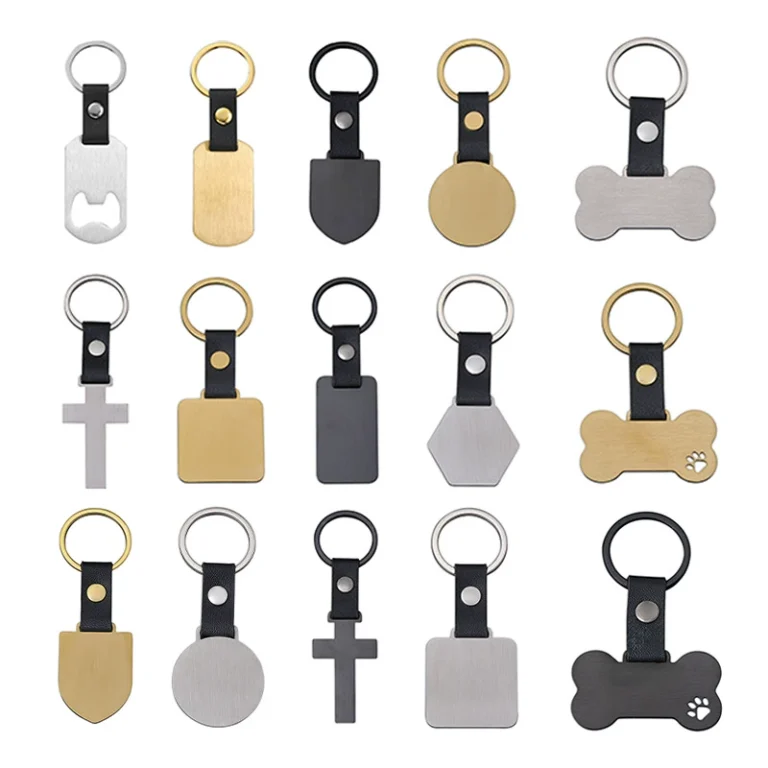
Compare common formats in PVC vs. acrylic vs. metal keychains. You can also browse PVC keychains and metal keychains for design references. Availability and specifications must be confirmed for each project.
How to Choose a Keychain Niche
Start with the customer rather than the manufacturing process. Potential directions include automotive, pets, sports, fitness, travel, hobbies, professions, clubs, gifts, and licensed or original character merchandise. Evaluate each idea using:
- Search demand and listing competition
- Customer reviews on comparable products
- Common complaints and unmet design needs
- Expected selling price and total landed cost
- Seasonality and inventory risk
- Intellectual-property ownership or licensing requirements
- Potential for variations without fragmenting inventory
Do not copy a competitor’s artwork, trademark, character, logo, or protected design. Confirm that you own or are authorized to use every visual element supplied to the manufacturer.
Private-Label Development Process
1. Prepare the product brief
Define the target customer, use case, material, approximate size, artwork, colors, finish, attachment, packaging, quantity, destination, and target launch date. State which features are required and which can be adjusted to improve manufacturability.
2. Request comparable quotations
Send the same specification to each supplier. Ask quotations to separate product, tooling, sample, packaging, inspection, and logistics where applicable. Confirm currency, trade term, quotation validity, repeat-order tooling conditions, and what is excluded.
3. Review the digital proof
Check dimensions, artwork placement, color references, spelling, attachment orientation, front and back, packaging layout, barcode area, warnings, and country-specific labels. A digital proof is not a substitute for a physical sample.
4. Approve a physical sample
Inspect size, weight, color, surface, print, edges, assembly, attachment, packaging fit, and overall presentation. Record approved characteristics with photos, measurements, or a signed sample so the bulk inspection has a reference.
5. Confirm bulk quality requirements
Agree on tolerances and acceptance criteria before production. Define how scratches, color variation, print shift, plating defects, loose hardware, sharp edges, packaging damage, mixed designs, and labeling errors will be evaluated.
6. Approve shipment information
Before dispatch, confirm quantities, carton count, unit and carton dimensions, gross and net weight, packing list, labels, shipping marks, commercial documents, destination, and receiving instructions.
Amazon Packaging and FBA Planning
Fulfillment requirements depend on the marketplace, category, product, packaging, and shipping plan. Provide the supplier or prep partner with the current instructions generated in your Seller Central workflow. Common planning points include:
- Individual unit packaging and scannable barcode placement
- Poly-bag, suffocation-warning, boxed-unit, or set requirements when applicable
- Protection from scratches, loose parts, moisture, or packaging separation
- Correct variation, SKU, and quantity identification
- Carton dimensions, weight, labels, and content accuracy
- Marketplace-specific product, consumer, importer, or safety labeling
- Whether preparation is completed by the manufacturer, freight partner, or a third-party prep center
Do not assume a supplier can ship directly to an Amazon fulfillment center merely because it offers international delivery. Confirm the complete responsibilities for preparation, booking, customs, duties, importer arrangements, appointment or carrier requirements, and delivery exceptions.
Can You Include a Keychain as a Packaging Insert?
A branded keychain may be used as a product component, bundle item, or promotional inclusion, but sellers must check current Amazon policies and applicable consumer rules. Do not use an insert to request a positive review, discourage negative feedback, divert an Amazon transaction, or offer an incentive tied to a review. Packaging content should accurately match the listing and fulfillment record.
How to Calculate Landed Cost and Margin
Landed cost per sellable unit = product + tooling allocation + sample allocation + packaging + inspection + freight + insurance + duties/taxes + prep + expected loss allowance.
Then account for referral fees, fulfillment fees, storage, advertising, discounts, returns, removals, payment costs, and taxes. Use current fee estimates for the exact product dimensions, weight, category, and marketplace. Small changes in packaging can affect both presentation and fulfillment economics.
| Variable | Why it changes the quote |
|---|---|
| Material and process | Different tooling, printing, molding, casting, finishing, and labor |
| Size and weight | Material use, packaging, freight, and fulfillment dimensions |
| Artwork complexity | Color count, detail, sides, 2D/3D features, and reject risk |
| Hardware | Ring, chain, clasp, hook, swivel, or custom attachment |
| Packaging | Bag, card, box, label, barcode, insert, and assembly labor |
| Quantity and variants | Setup allocation, separate tooling, color changes, and inventory split |
| Destination | Freight, duties, tax, documentation, and delivery requirements |
For broader commercial planning, read Is a Keychain Business Profitable?
Supplier Evaluation Checklist
- Does the quotation match the requested material, size, finish, hardware, packaging, and quantity?
- Does the supplier identify artwork details that may not reproduce reliably?
- Are tooling ownership and repeat-order conditions documented?
- Is the physical sample approval process clear?
- Can quality criteria and inspection evidence be agreed before production?
- Are carton data and labeling checked before shipping?
- Are material, performance, safety, or environmental claims supported?
- Are payment terms, trade terms, changes, and defect handling written clearly?
See how to buy custom keychains from a China factory for additional sourcing questions.
RFQ Checklist for an Amazon Private-Label Keychain
- Vector logo or production artwork
- Reference image and intended customer niche
- Material and manufacturing preference
- Finished dimensions, thickness, and target weight
- Colors, finish, print, engraving, enamel, or plating
- Ring, chain, clasp, or special attachment
- Individual packaging and barcode requirements
- Quantity for each design or variation
- Required sample and inspection process
- Destination country, fulfillment route, and trade term
- Target delivery date and current Amazon prep instructions
Final minimum order quantity, tooling, pricing, sampling, production time, packaging capability, documentation, and shipping support must be confirmed against your design and destination.
Best-Selling Keychain Types for Amazon Private Label
Some keychain formats are easier to launch on Amazon than others. The right choice depends on your niche, your price point and how much design work you want to own. The table below compares the formats private-label sellers use most often.
| Keychain type | Why it sells | Points to plan |
|---|---|---|
| Personalized name keychains | Strong gift demand; easy to build a variation family (names, initials, colors) | Many variations mean more SKUs, barcodes and inventory to manage |
| Acrylic anime / pop culture | Bright full-color printing; low tooling cost; fast design changes | Only sell original artwork or designs you have the rights to use |
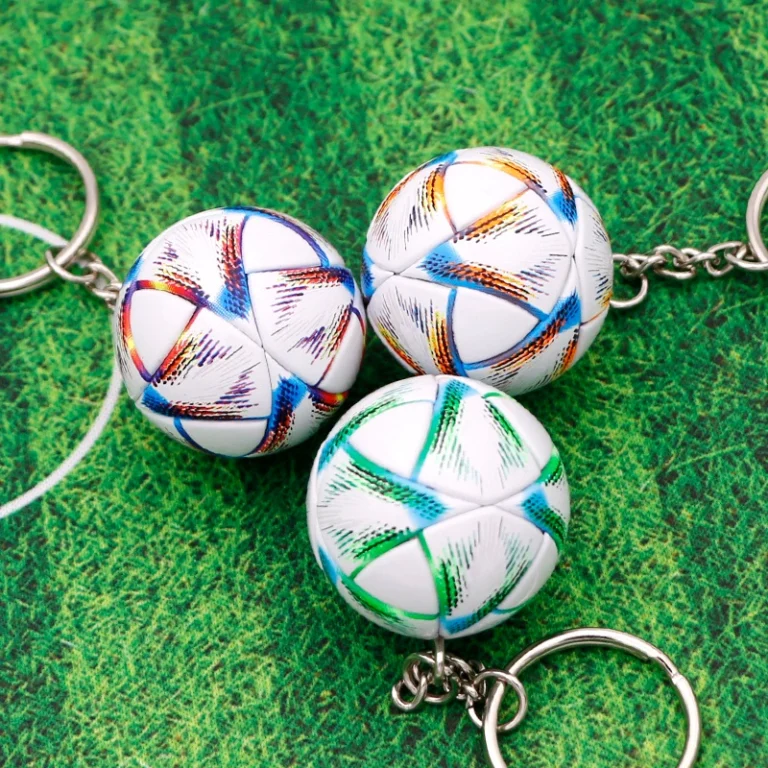
| PVC 3D keychains | Soft, durable, colorful; good for mascots, food shapes and characters | Needs a mold, so the first order costs more than printed styles |
| Metal premium gift keychains | Higher perceived value; suits gift sets and engraved designs | Plating and mold costs; check weight for FBA fees |
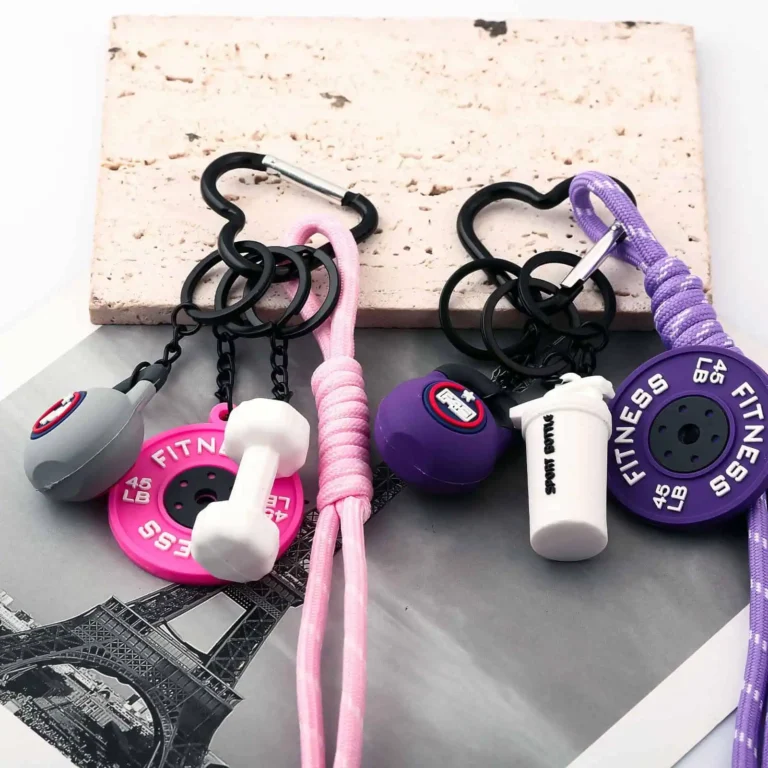
| Functional (bottle opener, AirTag holder) | Solves a problem, so buyers search for it by use | Check fit and function carefully on samples before bulk production |
| Eco-friendly (bamboo, wood, recycled plastic) | Appeals to sustainability-minded shoppers | Only make material claims you can document |
Many sellers start with one core format and add a second format later once reviews and sales data show what customers want. For material basics, see our comparison of PVC vs acrylic vs metal keychains.
Amazon Compliance Considerations
Amazon’s requirements change over time, so always check the current Seller Central rules for your category and marketplace before you finalize artwork and packaging. As a general guide, plan for these points early:
- Labels: each sellable unit usually needs a scannable barcode, such as an FNSKU label, placed where it is easy to scan. Your factory can apply barcode labels you supply.
- Poly bag warnings: poly bags above a certain size typically need a suffocation warning. Confirm the current size threshold and wording before printing.
- Products for children: if your keychain is designed or marketed for kids, extra safety testing and documentation may be required. Small parts, paint and plating all matter here, so decide your target age group before design.
- Material claims: words such as “eco-friendly”, “recycled” or “stainless steel” should match what you can prove. Ask your supplier for a material declaration and keep it on file.
- Country of origin and brand marking: confirm how origin and your brand name should appear on the product or packaging.
A good supplier will help you apply labels and warnings correctly, but responsibility for compliance stays with the seller account.
How MOQ Affects Product Testing on Amazon
Minimum order quantity decides how much risk you carry on each new listing. Lower MOQ lets you test more designs; higher MOQ usually brings a lower unit cost once a product is proven.
- Start with printed or stock-shape styles when you want to test several designs, because they avoid mold costs.
- Keep the first order small enough to sell through in a reasonable time, so you are not paying long-term storage fees on slow stock.
- Once a design proves itself, move to a larger reorder to lower the unit cost. Molds are kept for repeat orders, so the reorder does not repeat the tooling cost.
- Test variations (colors, names) inside one listing where possible, instead of committing large quantities to each one.
We offer MOQ from 100 pcs for selected styles; complex molded or metal projects may need more. Read our custom keychain MOQ guide for details.
Listing Images and Visual Presentation
On Amazon, the main image often decides whether a shopper clicks. Plan your photos while you plan the product, not after it arrives in the warehouse.
- Use a clean white-background main image that shows the full keychain, ring included.
- Add a scale image (in a hand or next to keys) so buyers understand the real size.
- Show the back side, the ring type and any function, such as a bottle opener or AirTag slot.
- Include a lifestyle image on a bag, backpack or car key set to show how it is used.
- If you sell a gift version, show the packaging, such as a backing card or gift box.
Our free digital mockup helps you check colors and proportions before production, and you can use approved samples for early photography when the timeline allows.
Common Amazon Seller Mistakes with Keychains
- Choosing a design by personal taste instead of search demand and competition in the niche.
- Ordering large quantities of an untested design and paying storage fees on unsold stock.
- Skipping a physical sample on complex or functional items, then finding fit or finish problems after delivery.
- Forgetting barcode labels or warning text until the goods are already packed.
- Using characters, logos or brand names without permission, which can lead to listing removal.
- Comparing suppliers only by unit price and ignoring packaging, labeling and shipping costs.
For a wider view of brand development, see our private label keychains manufacturing guide.
Frequently Asked Questions
Which keychain material is best for Amazon private label?
There is no universal best material. PVC suits colorful molded designs, acrylic suits printed artwork, metal supports premium finishes, and leather or fabric can suit gift-oriented positioning. Choose based on the customer, artwork, landed cost, packaging, and quality requirements.
What determines the MOQ for custom keychains?
MOQ depends on material, tooling, process, color changes, packaging, component purchasing, and the number of designs. Request a project-specific quotation instead of assuming one quantity applies to every style.
Can a manufacturer prepare keychains for Amazon FBA?
Some suppliers or logistics partners may support unit packaging, barcodes, carton labels, or delivery coordination, but capabilities and responsibilities vary. Provide the current instructions and confirm each task in writing.
Should I approve a sample before bulk production?
For a new private-label design, a physical sample helps verify appearance, dimensions, print, finish, attachment, packaging, and manufacturability before the bulk order.
Can I include a free keychain in an Amazon order?
Check current Amazon policies, listing accuracy, fulfillment records, and applicable consumer rules. Never condition a gift or incentive on a positive review, removal of negative feedback, or an off-platform transaction.
What should I send for a private-label quote?
Send artwork, material, size, colors, finish, hardware, packaging, quantity, destination, fulfillment route, sample expectations, and target delivery date.
Can the factory apply my FNSKU labels before shipping to Amazon?
Yes. You can send us your barcode label files and we can apply them to each OPP bag, backing card or gift box before packing. Tell us the label size and position you need, and check Amazon’s current labeling rules so the labels scan correctly when the goods arrive at the fulfillment center.
Which keychain type is easiest for a first Amazon launch?
Printed acrylic and stock-shape styles are often the easiest start, because they avoid mold costs and allow small test quantities. They also let you change designs quickly. Once a design sells well, you can move to molded PVC or metal versions for a more premium look and a lower unit cost on larger orders.
Do I need a physical sample before my first Amazon order?
For simple printed designs, an approved digital mockup is often enough. For molded, metal or functional keychains, a physical sample is a good idea because it lets you check size, finish, weight and function. It also gives you real product photos for your listing while bulk production is planned.
One Comment