Quick answer
Die cut keychains follow the exact outline of your design, while standard keychains use a stock shape such as a circle, square or rectangle. Die cut designs usually cost a little more because they need a custom cutting die or mold, and irregular shapes can pack less efficiently. Standard shapes are the cheapest and fastest option; die cut gives a more distinctive, premium look.
When designing a custom keychain for wholesale, one of the first decisions you’ll face is shape: do you go with a standard shape (rectangle, oval, circle, house) or a die cut design that follows the exact outline of your artwork?
It’s not just an aesthetic choice. Shape affects your mold cost, per-unit price, shipping weight, retail packaging options, and even how well the keychain photographs for e-commerce listings.
Here’s a clear, buyer-focused breakdown of everything you need to know.
What Is a Die Cut Keychain?
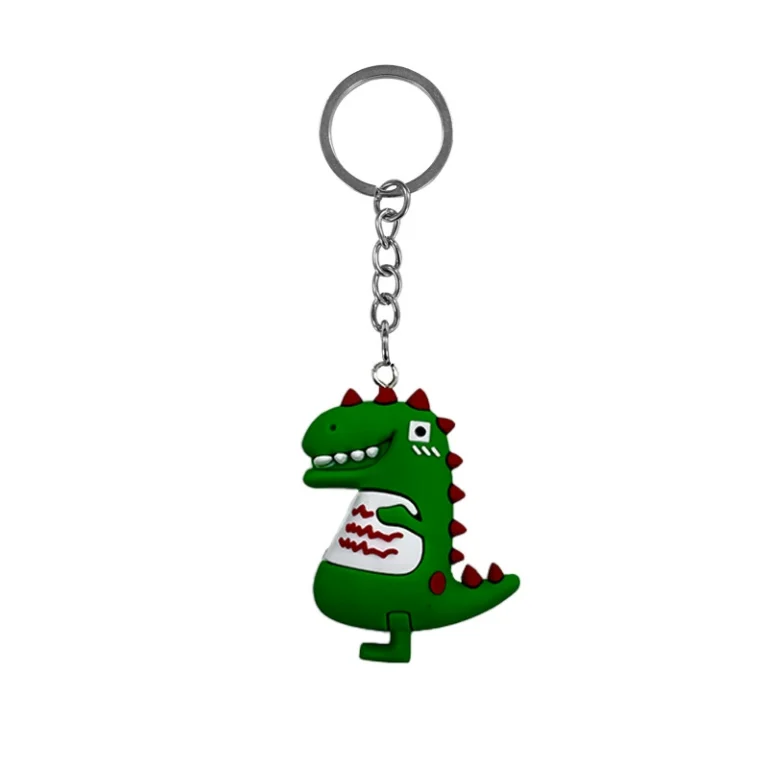
A die cut keychain is cut to a fully custom outline — the shape follows the contour of your design. A cartoon character becomes a keychain shaped exactly like that character. A logo with irregular edges is cut to match those edges precisely.
The term “die cut” comes from the physical cutting die (a custom blade tool) used to stamp the shape from flat material. In modern production, this is often achieved via CNC cutting or laser cutting, but the principle is the same: any shape you can draw, you can cut.
Common die cut keychain materials:
- Acrylic — most popular for die cut; clean edges, takes full-color UV printing beautifully
- PVC rubber — also die-cuttable, though most complex PVC shapes use injection molding instead
- MDF/wood — laser cut, excellent for artisan or handcrafted aesthetics
- Foam/felt — for soft, lightweight applications
A standard shaped keychain uses a fixed, pre-existing shape — rectangle, circle, oval, dog tag, or similar. No custom die or mold required. Your artwork is printed or engraved within that shape.
Die Cut vs. Standard Shaped Keychains: Full Comparison
| Factor | Die Cut | Standard Shape |
|---|---|---|
| Setup cost | $80–$300 (one-time die/mold fee) | $0 (no setup fee) |
| Per-unit cost (500 units) | $1.70–$2.80 | $1.40–$2.10 |
| Per-unit cost (1,000 units) | $1.20–$1.80 | $0.95–$1.50 |
| MOQ | 100–200 units (varies by supplier) | 50–100 units |
| Production time | 12–18 business days | 8–12 business days |
| Shape flexibility | Unlimited | Fixed to standard templates |
| Visual impact | Very high — shape IS the design | Moderate — artwork within shape |
| Packaging complexity | Moderate to high (irregular shape) | Low (standard-size bags available) |
| Shipping weight | Slightly lower (less material wasted) | Standard |
| Best for | Character merch, brand icons, retail | Promotions, corporate gifts, events |
Do Die Cut Keychains Cost More to Ship Due to Irregular Shapes?
This is one of the most commonly searched questions — and the answer is mostly no, with one important nuance.
Why die cut keychains are NOT meaningfully heavier to ship: Die cut keychains actually remove material along the edges, making each piece slightly lighter than a solid rectangle of the same bounding-box dimensions. A die cut keychain in the shape of a cat is lighter than a rectangle that would contain that cat shape.
For air freight (the standard shipping method for most keychain orders), pricing is based on the gross weight or the volumetric weight of the complete shipment. Individual shape variation has a negligible effect at the carton level.
The one real exception — bulky 3D irregular shapes: If your die cut design has significant three-dimensional relief (a thick 3D PVC design, for example) that cannot be efficiently stacked in cartons, it can increase volumetric weight. Flat acrylic or standard PVC die cut keychains do not have this issue.
Bottom line: For flat acrylic, PVC sheet, or wood die cut keychains, expect the same shipping costs as standard shaped keychains at equivalent quantity and weight. Budget the same per-unit shipping estimate.
Price Comparison: Real Numbers for Common Scenarios
Scenario A: Indie Artist Character Merch (500 units)
- Design: Custom illustrated character, die cut to outline
- Material: Acrylic, full-color UV print, epoxy coating
- Packaging: Individual OPP bag with custom header card
| Die Cut | Standard Rectangle | |
|---|---|---|
| Mold/die fee | $150 | $0 |
| Per unit | $2.10 | $1.65 |
| 500-unit total | $1,200 | $825 |
| Difference | +$375 | — |
Verdict: Die cut costs ~45% more for this run. However, a character-shaped keychain commands $8–$15 retail vs. $4–$7 for a rectangle — the margin improvement justifies the upfront investment.
Scenario B: Corporate Event Giveaway (2,000 units)
- Design: Company logo in flat color on rectangle keychain
- Material: Metal, debossed logo
- Packaging: Bulk bag for distribution
| Die Cut | Standard Rectangle | |
|---|---|---|
| Mold/die fee | N/A (logo works better as standard) | $0 |
| Per unit | — | $1.60 |
| 2,000-unit total | — | $3,200 |
Verdict: For a corporate logo giveaway with no character/icon shape, standard is almost always the right call. Die cut adds cost with minimal brand impact for simple logo designs.
How to Package Custom Die Cut Keychains for Retail Sale
Packaging die cut keychains for retail is slightly more involved than standard shapes, because the irregular outline doesn’t fit standard poly bags efficiently. Here are the three most effective approaches:
Option 1: Header Card + OPP Bag (Most Common for Retail)
A custom-printed header card (your branding, barcode, care info) is attached to an OPP polybag that is sized to fit your specific die cut shape. The keychain sits inside the bag with the header card stapled or heat-sealed at the top.
- Cost: $0.25–$0.60 per unit (including header card printing)
- Best for: Gift shops, online retail (ships flat, photographs well)
- Tip: Size the bag 1–1.5cm larger than your keychain bounding box for a clean fit
Option 2: Backing Card (Euro Slot)
The keychain is attached directly to a stiff printed backing card with a euro hole punch at the top for hanging display. The card is sized to match or slightly exceed the keychain dimensions.
- Cost: $0.30–$0.80 per unit
- Best for: Physical retail display on pegboard hooks, conventions, markets
- Tip: Use 300–350gsm coated card stock for durability; matte lamination prevents fingerprints
Option 3: Clamshell Box or Windowed Box
A rigid box with a clear PVC window showing the keychain inside. Premium presentation for gift retail or subscription box inclusions.
- Cost: $0.80–$2.50 per unit depending on box size and print quality
- Best for: Gift sets, premium retail, subscription boxes, corporate gift kits
- Tip: Measure die cut keychain dimensions precisely; irregular shapes require custom-fit inserts
Packaging Dimensions: What to Measure
For any die cut keychain going into retail packaging, measure and provide these dimensions to your packaging supplier:
- Bounding box (width × height at widest/tallest points)
- Thickness (for box sizing)
- Keyring attachment point (top center? top corner? affects card positioning)
- Weight (for header card hanging strength calculation)
Which Should You Choose? A Decision Framework
Choose die cut if:
- Your design IS a character, icon, or distinctive shape (the shape is the point)
- You’re selling at retail, where the keychain needs to stand out on a shelf or in photography
- You plan to reorder — the one-time die fee is quickly amortized
- Your target audience is fans, collectors, or merch buyers
Choose standard shape if:
- It’s a corporate giveaway or event promotional item
- Your branding is logo/text-based rather than illustration-based
- You need a fast turnaround or low MOQ
- Budget is tight,t and you need to minimize upfront costs
Choose standard shape initially and switch to die cut on reorder if:
- You’re testing a new design concept
- You want to validate demand before investing in a custom die
- Your budget for the first run is limited
Frequently Asked Questions
What materials work best for die cut keychains? Acrylic is the most popular choice in 2026 — it cuts cleanly, takes full-color UV printing with excellent sharpness, and the clear or colored acrylic base adds visual depth. PVC rubber is popular for character designs that benefit from a soft, flexible feel. MDF/wood works well for natural or artisan aesthetics.
Can I get the same design in both die cut and standard shapes? Yes, this is common for buyers who want to test both. Note that die cut requires a separate die/mold fee.
How precise are the cuts on acrylic die cut keychains? Modern CNC and laser cutting achieve tolerances of ±0.2mm. For most designs, this means edge quality is excellent. Very fine details (lines thinner than 1mm) should be avoided at the edges as they can be fragile.
What’s the minimum detail size for a die cut outline? Keep any cut-to-edge detail at least 2mm wide. Narrow protrusions (like thin fingers or antennae on character designs) are prone to breakage in shipping — round them slightly or add a connecting element in your design.
Does die cut affect the keyring attachment? Not structurally — the keyring is attached via a metal jump ring and loop through a drilled hole, regardless of shape. Just ensure your design includes a 4–5mm margin at the attachment point.
Can I order die cut keychains with eco-friendly materials? Yes. Recycled acrylic and FSC-certified wood are available for die cut applications. Expect a 10–20% material premium.
Get a Quote for Die Cut or Standard Custom Keychains
Whether you’ve settled on die cut or standard shape — or you’re still deciding and want a comparison quote for both — our team can provide detailed pricing, free mockups, and packaging recommendations within 24 hours.
👉 Request a Free Custom Keychain Quote →
Include your artwork (or a rough sketch), preferred material, quantity, and whether you need retail packaging. We’ll come back with itemized pricing for both options so you can decide with real numbers.