Introduction: Lessons From a Decade in Custom Keychains
I’ve been sourcing, designing, and strategizing promotional products for over ten years. Among all items I’ve worked with, custom keychains hold a unique place. They’re deceptively simple, yet when approached strategically, they become one of the most effective branding tools a company can deploy.
Over the years, I’ve observed countless companies make the same mistakes: they order keychains in bulk, distribute them at events, and then wonder why no one remembers the brand. The problem is not the keychain itself—it’s the strategy behind it.

In this guide, I’ll share my hands-on experience on creating a custom keychain strategy that delivers measurable results. You’ll learn:
- How to choose materials and design with impact
- How to select suppliers who understand your brand
- How to integrate keychains into campaigns that actually generate engagement
- Mistakes to avoid that waste time and money
By the end, you’ll have a practical roadmap for turning a small promotional item into a powerful marketing asset.
Start With the End in Mind — Define Your Goals
Before sourcing a single keychain, ask yourself:
- What is the purpose of this campaign?
- Who is my target audience?
- How will I measure success?
A seasoned buyer doesn’t just order based on quantity. Every decision should tie back to a clear goal: increasing brand recognition, driving customer engagement, or incentivizing repeat purchases.
For example, a tech startup targeting millennials might prioritize modern, minimalistic keychains with premium materials, whereas a retail store promoting a seasonal event might choose colorful, novelty shapes that stand out on a counter display.
Material Matters — It Shapes Perception
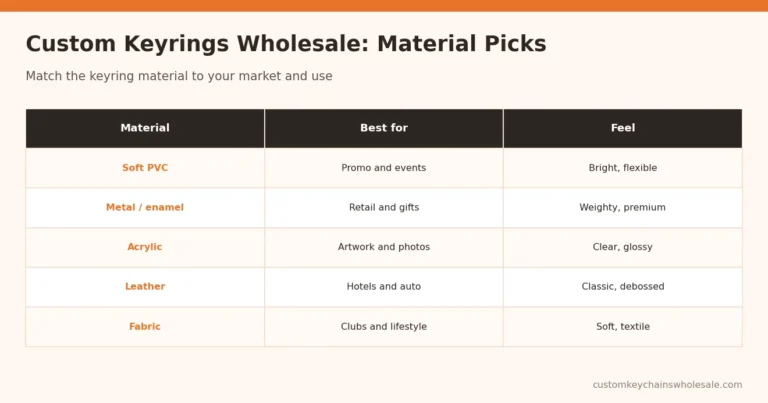
From my experience, the material of a keychain communicates your brand silently but powerfully. Here’s what I’ve learned works best:
Metal Keychains
- Why I like them: Weight conveys quality. Customers instinctively perceive heavier keychains as premium.
- Best use: Corporate gifts, VIP events, trade shows.
- Pro tip: Zinc alloy or stainless steel with subtle engraving can make a simple design feel high-end.
Acrylic and PVC
- Why I like them: They allow for creativity—colors, shapes, and transparency.
- Best use: Retail promotions, fun campaigns, merchandise for younger audiences.
- Pro tip: Don’t compromise thickness; a flimsy keychain undermines perceived value.
Eco-Friendly Materials
- Why I like them: Reflects brand values. Using bamboo, recycled acrylic, or wheat straw signals responsibility.
- Best use: Sustainability-focused campaigns, NGO giveaways, corporate social responsibility initiatives.
- Pro tip: Always request certificates or material sourcing proof to avoid “greenwashing.”
Design With Purpose, Not Just Style
Designing keychains isn’t about making something cute—it’s about crafting something people want to use and keep.
Functional Over Flashy
The most successful keychains combine function with brand identity:
- Bottle opener keychains are popular because they serve a purpose.
- Multi-tool keychains subtly communicate innovation or practicality.
- Simple engraved metal keychains are kept for years because of their aesthetic durability.
Incorporate Brand Story
Every keychain should reflect your brand’s story. Use colors, typography, or subtle icons that connect to your company values. This is something I always stress to clients: small details can leave lasting impressions.
Supplier Selection — The Difference Between Ordinary and Exceptional
A keychain is only as good as the supplier producing it. Over the years, I’ve seen companies frustrated by inconsistent quality, delayed shipments, and misleading samples.
Look for Transparency
- Suppliers should provide material specs, photos of production, and proof of certifications (ISO, CE).
- Ask for multiple sample units to check quality.
Test Communication
- Experienced buyers often measure supplier reliability by responsiveness.
- Delays in communication often translate to delays in production.
Negotiate Wisely
- Minimum order quantities, bulk discounts, and sample fees should be clearly stated upfront.
- I often suggest negotiating a smaller initial batch to test quality before scaling.
Integrating Keychains Into Campaigns That Work
Keychains shine when they’re part of a larger marketing strategy. From my experience:
- Trade shows: Pair keychains with product demos or QR codes to drive traffic.
- Corporate gifting: Include keychains in welcome kits or loyalty packages.
- Retail promotions: Tie them to a purchase incentive—“buy one, get a limited-edition keychain.”
Remember, distribution alone isn’t enough. Track how recipients interact with your keychains. A simple QR code on a keychain can help measure engagement and ROI.
Common Mistakes Experienced Buyers Avoid
- Choosing materials solely based on price
- Ignoring the user experience (weight, durability, design)
- Ordering without prototypes or physical samples
- Overlooking packaging quality
- Distributing too many keychains without a targeted strategy
Avoiding these mistakes separates a high-impact campaign from a forgotten giveaway.
Conclusion: Small Items, Big Impressions
Custom keychains are deceptively simple, yet they can become one of your brand’s most effective tools. When approached with strategy, insight, and attention to detail, these small items can drive engagement, strengthen brand perception, and generate measurable ROI.
From choosing the right material, designing functional and attractive keychains, to working with reliable suppliers and integrating campaigns thoughtfully, every step matters.
After ten years of working with global buyers, one truth is clear: the difference between a forgettable giveaway and a high-impact promotional product lies in strategy, execution, and attention to detail.
When you treat keychains as an asset rather than a cheap giveaway, your brand wins every time.