Not every buyer needs thousands of custom keychains.
Many small businesses, startups, event organizers, schools, clubs, and first-time sellers are looking for something much more practical. They want a custom keychain that looks professional, fits their budget, and can be ordered in a lower quantity without creating too much risk.
That is why low MOQ custom keychains are such an important topic for newer buyers. A lower starting quantity makes it easier to test a design, launch a small product idea, prepare for a local event, or add branded merchandise without committing to a large inventory order.
At the same time, low MOQ does not always mean the same thing for every project. The possible order quantity depends on the design, material, packaging, and production structure. A simple order is very different from a highly customized retail-ready product with special accessories or premium presentation.
If you are looking for custom keychains with a lower minimum order quantity, this guide explains what to expect and how to make the order work for your business or event.
Need help with your project? Send us your design, target quantity, preferred material, destination country, and deadline. A clear request helps us recommend the most practical low-MOQ option.
Why low MOQ matters for smaller buyers
Low MOQ matters because smaller buyers usually need flexibility more than volume.
A startup may be testing a new brand idea and may not want to commit to a large first order before seeing market response. A small business may want a branded add-on product without tying up too much cash. An event organizer may have a fixed attendance number and only need a limited quantity. A school, club, or fundraiser may be working with a strict budget and a clearly defined group size.
In each of these situations, a lower MOQ makes it easier to move forward.
It reduces inventory pressure, lowers financial risk, and gives the buyer more freedom to test the product before making a larger long-term commitment. For some buyers, that is the difference between ordering now and postponing the project entirely.
This is why low MOQ is not just a price issue. It is also a decision-making issue. The easier the order feels, the more likely the inquiry becomes a real order.
Who usually needs low MOQ custom keychains?
Low MOQ custom keychains are especially useful for buyers who are still in the testing or early-stage phase.
Small businesses often use them for branded merchandise, customer gifts, local promotions, checkout add-ons, or simple retail experiments. These businesses may want a polished result, but they may not yet know which design or quantity will perform best.
Startups often use low-MOQ orders to validate product ideas, support a launch, or create low-cost merchandise that strengthens early brand identity. They usually care about flexibility and controlled upfront cost more than large-scale production savings.
Event organizers may need custom keychains for conferences, school events, weddings, sports tournaments, club activities, fundraising campaigns, or local community promotions. Their quantity needs are usually tied directly to participant numbers, which makes a smaller run more practical.
E-commerce sellers and first-time online brands may also prefer a lower MOQ when testing new niche designs. Instead of ordering too much inventory, they can start smaller and learn from market response before scaling.
In each of these cases, the buyer is not looking for the largest possible factory run. They are looking for a practical way to start.
What does low MOQ really mean?
Low MOQ does not always mean the same quantity for every supplier or every product.
A lower MOQ is usually possible when the design is straightforward, the material is standard, and the packaging is simple. More complex products may require a higher minimum because they involve extra setup, more customization, or less efficient production.
That is why it is important to think of low MOQ as a project-specific conversation rather than a fixed number. A simple promotional PVC keychain may be easier to support at a lower quantity than a premium metal keychain with custom gift packaging and special attachments.
The key point is this: lower MOQ is usually easier to achieve when the order is practical to produce.
Buyers who want a smaller order should be prepared to balance design ambition with production efficiency. A supplier can often help with that by recommending the right material, shape, and packaging structure.
Which materials are best for low MOQ custom keychains?
The best material for a lower-quantity order usually depends on your design goal and your budget.
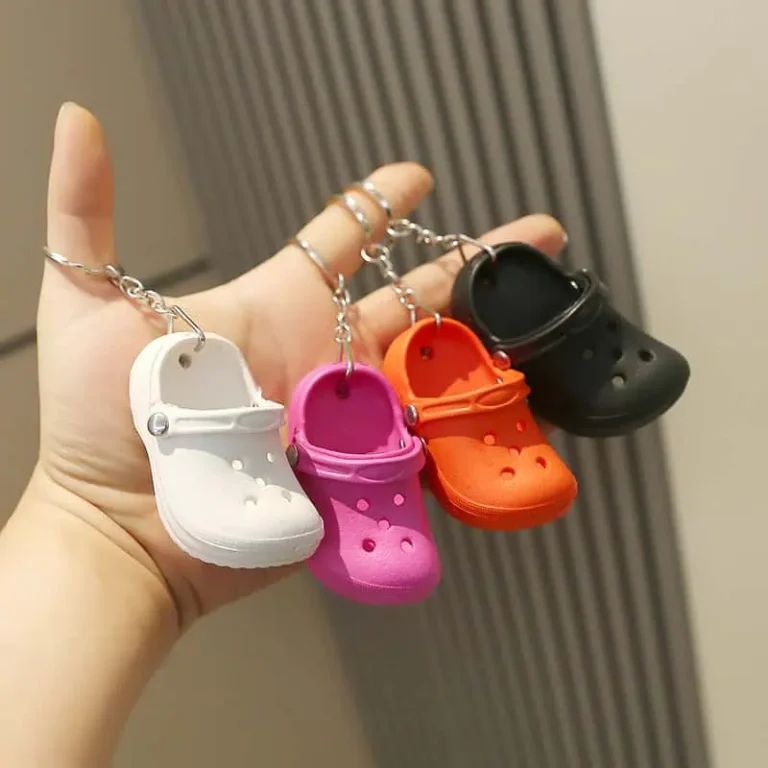
PVC keychains are often a practical choice for colorful, playful, and budget-sensitive projects. They are popular for school activities, sports clubs, local promotions, and event giveaways.
Acrylic keychains are often suitable for printed artwork, illustrations, anime-style designs, and lightweight small-run retail products. They can work well for smaller brands or online sellers who want clear visual presentation.
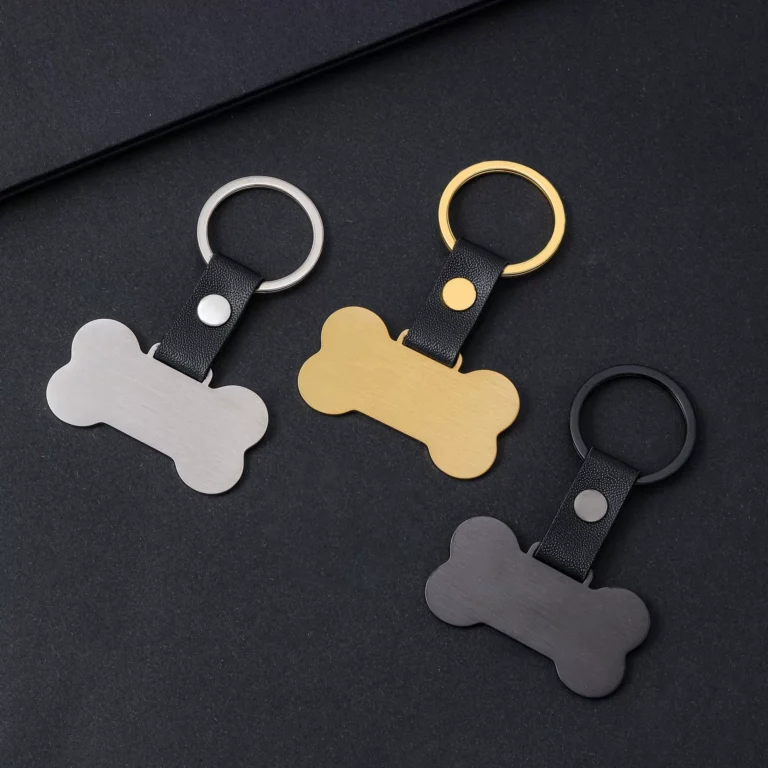
Metal keychains usually create a more premium look and feel, but they may be better suited for projects where the buyer wants stronger perceived value rather than the absolute lowest starting cost.
Leather keychains are usually chosen for boutique branding, fashion-oriented projects, and more refined merchandise concepts. They can work well for smaller premium-focused orders if the brand positioning supports them.
When the quantity is lower, buyers should think carefully about the balance between cost and appearance. The right material is not just the cheapest one. It is the one that fits the audience, the use case, and the realistic budget for a smaller order.
How does lower quantity affect pricing?
A lower quantity usually means a higher unit cost.
This happens because setup, proofing, planning, and production preparation still take time even when the order size is smaller. Those costs are simply spread across fewer pieces, which makes the price per unit less efficient than in a larger order.
This does not mean a low-MOQ order is a bad idea. It simply means the buyer should evaluate the order based on purpose rather than on lowest unit price alone.
For example, a startup testing a new product may accept a higher unit cost because the goal is learning, not scale. An event organizer may accept a smaller run because the quantity is tied to attendance. A small retailer may prefer a lower-risk order even if the first batch has a slightly tighter margin.
This is why low MOQ is really about flexibility. The buyer is paying for a more manageable first step.
Can low MOQ still work for branding and retail?
Yes, absolutely.
Some buyers assume that lower-quantity orders only make sense for giveaways or simple promotions. In reality, low MOQ can also work very well for branding, retail testing, and market validation.
A small business can use a custom keychain as branded merchandise without ordering too much stock. A boutique retailer can test whether a design sells before expanding the line. A startup can use a low-MOQ order to support a launch, build audience engagement, or create a product that improves brand identity.
The important thing is to choose a structure that matches the scale of the business. A small first order should still look intentional. It does not need to feel temporary or low quality.
In many cases, a well-designed smaller run can be much more useful than a large order chosen too early.
What kind of packaging makes sense for low-MOQ orders?
Packaging should match the role of the product.
If the keychains are for event distribution, a basic packaging format is usually enough. That keeps the order efficient and helps protect budget.
If the order is for retail, gifting, e-commerce, or boutique brand presentation, packaging may need more attention. A backing card, insert, barcode label, or other simple branded packaging element can improve presentation without making the order unnecessarily complex.
The key is not to overbuild the packaging for a small order. Buyers sometimes try to add too many extras too early, which increases cost without always adding commercial value.
For a low-MOQ project, the best packaging is usually the one that supports the use case clearly while keeping the order manageable.
How should startups use low MOQ custom keychains?
For startups, low MOQ is often the smartest way to begin.
Instead of committing to a large order before understanding demand, a startup can use custom keychains as a way to test branding, introduce merchandise, support a launch campaign, or build early customer connection.
This can be especially useful for niche brands, creator-led businesses, small online shops, local lifestyle brands, and event-based product launches. The product is compact, visible, and easy to integrate into early brand activity.
A low-MOQ keychain order also gives the startup room to learn. The team can see how customers respond, how the packaging feels, whether the design direction works, and whether a larger reorder makes sense.
For early-stage brands, that flexibility is often more valuable than the lowest possible factory pricing.
How should small businesses use low MOQ custom keychains?
Small businesses often benefit from custom keychains because they can add branding value without requiring a large merchandising budget.
A café, boutique, pet service, salon, local gift store, school shop, or community business can use a custom keychain as an impulse product, customer gift, loyalty item, or brand add-on. These businesses may not need a huge quantity. They need a product that feels practical, useful, and easy to introduce.
That is where low MOQ helps. It allows the business to test a custom product in a real customer environment before scaling.
A small order also gives the business more freedom to refine design direction later. If customer response is strong, the next order can be larger and more optimized.
How should event organizers use low MOQ custom keychains?
Event buyers often need flexibility more than anything else.
A school tournament, wedding, conference, charity event, community gathering, festival booth, or club campaign may only need a limited quantity based on attendance or distribution plans. In these situations, a lower MOQ makes the order feel much more realistic.
Event keychains can work as keepsakes, registration gifts, sponsorship items, team accessories, or low-cost branded souvenirs. The design usually does not need to be overly complex. It should be easy to recognize, relevant to the event, and practical to distribute.
For event orders, timing is especially important. The required date should always be part of the first inquiry so the supplier can recommend the most workable production plan.
What should buyers send to request a low-MOQ quote?
A good inquiry makes it easier to identify whether a lower quantity is practical.
The first message should usually include:
- Your logo, artwork, or reference image
- Target quantity
- Approximate size
- Preferred material
- Intended use, such as event, retail, startup launch, promotion, or gifting
- Packaging requirements
- Destination country
- Required deadline
The more clearly the supplier understands your project, the easier it is to recommend a low-MOQ structure that fits your needs.
Common mistakes buyers make with low-MOQ custom orders
One common mistake is focusing only on the smallest possible quantity. That can lead buyers to ignore whether the product still makes commercial sense at that level.
Another mistake is making the design or packaging too complicated for a first small order. A more practical structure often creates a smoother and more affordable project.
Some buyers also compare only unit price. A lower quantity will usually have a higher unit cost, so the real question is whether the order helps you test, launch, or deliver your project successfully.
A final mistake is not sharing enough information in the first inquiry. A supplier cannot recommend the best low-MOQ solution if the design, purpose, and timing are still unclear.
Scaling Up After a Low-MOQ Test Order
A low-MOQ order is a test, not the end goal. Once you know which designs sell, the next step is a planned reorder that lowers unit cost and improves presentation. Here is how the order usually changes from stage to stage.
| Stage | Typical quantity | What changes |
|---|---|---|
| Test order | Low, from 100 pcs for selected styles | Higher unit cost; simple packaging such as an OPP bag; focus is on checking design and demand |
| First reorder | Medium | Unit cost falls; molds from the test order are reused, so no new tooling cost; you can add a backing card or hang tag |
| Growth reorder | Higher | Better price tier; branded packaging such as a gift box or printed card; barcode labels and carton marks for retail or marketplace stock |
| Range expansion | Higher, spread across designs | New colors or shapes built on existing molds; mixed-design cartons planned together to keep costs down |
A few habits make scaling smoother:
- Keep your approved artwork, Pantone colors and sample as the reference for every reorder, so repeat batches match.
- Track sell-through by design. Reorder the winners in larger quantities and drop slow sellers early.
- Plan packaging upgrades at the reorder stage, when volume justifies printed cards or boxes. Our packaging guide explains the options.
- Place reorders before stock runs out. Production and shipping time depend on the style and quantity, so check the lead time guide when planning.
Because molds are kept for repeat orders, the tooling you paid for in the test order keeps working for you. Many buyers find that the second or third order is where the real savings appear.
Frequently Asked Questions
What does low MOQ mean for custom keychains?
It means a lower starting order quantity than a typical bulk production run, but the exact quantity depends on the project structure, material, and packaging.
Are low-MOQ custom keychains good for startups?
Yes. They are often a smart way for startups to test branding, launch merchandise, and validate product ideas without taking on too much inventory risk.
Can small businesses order custom keychains in lower quantities?
Yes. Many small businesses use lower-quantity custom keychains for local promotions, branded merchandise, and customer gifts.
Are low-MOQ orders more expensive per piece?
Usually yes. Smaller orders generally have a higher unit cost because setup and preparation costs are spread across fewer pieces.
What should I send to get a quote?
Send your design, quantity, approximate size, preferred material, packaging needs, destination country, and deadline.
Will my reorder look the same as my test order?
It should, if you keep the same references. We keep your molds, and we use the approved artwork, color codes and sample from the first order to guide the reorder. Tell us if anything should change, such as a new color or packaging, so it can be confirmed before production starts.
When should I move from a low-MOQ order to a larger quantity?
Move up when a design has proven demand, for example steady sales or repeat requests from customers. At that point a larger order usually lowers the unit cost. Keep testing new designs at low quantity while you scale up the proven ones, so you balance savings with limited risk.
Can I upgrade packaging on a reorder without changing the keychain?
Yes. Packaging can be upgraded separately from the product. Many buyers start with a simple OPP bag, then add a backing card, hang tag, barcode label or gift box on later orders. We send a mockup of the new packaging for approval before production.
Ready to order low MOQ custom keychains?
If you are a small business, startup, or event organizer, a lower-quantity custom keychain order can be a practical way to start without overcommitting. The key is to choose a product structure that fits your real goal, budget, and timeline.
Send us your design, target quantity, preferred material, packaging requirements, destination country, and deadline. We will review your project and recommend the most practical low-MOQ custom keychain solution.