If you are sourcing custom keychains in bulk, the real question is not just “What is the lowest unit price?” The better question is “What combination of material, quantity, packaging, and lead time gives me the best value for my project?”
For brands, wholesalers, Amazon sellers, event organizers, and promotional buyers, bulk custom keychain pricing depends on much more than the design itself. A simple PVC keychain for a giveaway will be priced very differently from a premium metal keychain for retail packaging or a leather keychain designed for long-term brand use.
That is why comparing quotes without understanding what is included can be misleading. One supplier may look cheaper at first, but the final cost can increase once you add mold charges, packaging, shipping, special hardware, or a rush deadline.
If you want a faster and more accurate quote, the best approach is to understand what affects price before you place your order.
Need a quote for your project? Send your logo or artwork, target quantity, preferred material, delivery country, and required date. A clear brief always leads to a faster and more accurate wholesale quote.
What affects the cost of custom keychains in bulk?
Bulk pricing usually depends on seven main factors: material, size, thickness, shape complexity, production method, packaging, and shipping.
Material is one of the biggest price drivers. PVC, acrylic, metal, and leather all have different production costs, visual effects, and perceived value. If your project is budget-sensitive, material choice matters immediately. If your project is retail-focused, perceived quality may matter even more than the lowest unit price.
Size and thickness also affect cost. Larger keychains use more material and often take more time to produce. Thicker pieces may feel more premium, but they can also increase material cost and shipping weight.
Shape complexity matters too. A simple round or rectangular design is generally easier and cheaper to produce than a highly detailed die-cut shape with multiple layers, cut-outs, moving parts, or assembled components.
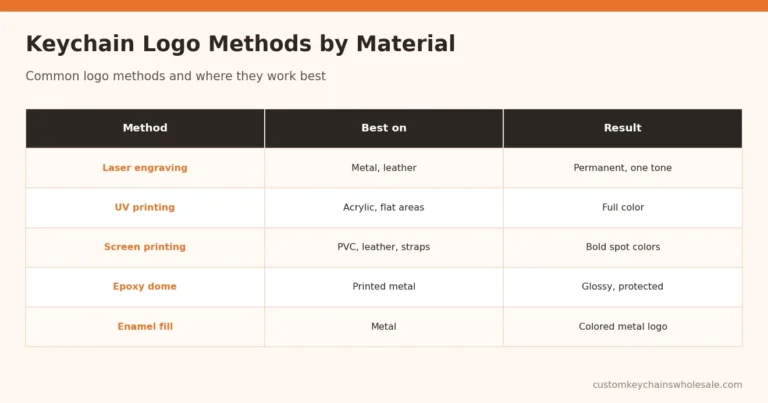
The production method can also change the price. Printed acrylic, soft PVC, hard enamel-style metal, engraved leather, UV printing, and epoxy coating all have different cost structures. Two keychains that look similar in a product photo may have very different production costs depending on how they are made.
Packaging is another factor buyers often underestimate. A basic poly bag is very different from a custom backing card, retail box, barcode sticker, hang tag, or Amazon-ready packaging. These details add cost, but they can also improve presentation, resale value, and retail readiness.
Finally, shipping affects the total landed cost. Even when the unit price looks attractive, the total project cost may increase if the keychains are bulky, heavy, urgently needed, or packed in custom retail packaging.
Need wholesale custom keychains?
We make custom keychains in bulk in PVC, metal and enamel, acrylic, leather, fabric and eco materials. MOQ usually starts from 100 pcs, and every order starts with a free digital mockup.
Wholesale Custom KeychainsPVC KeychainsMetal KeychainsGet a Free Mockup & QuoteWhich material is most cost-effective for bulk orders?
The best material depends on your goal.
PVC keychains are usually the most cost-effective option for promotional giveaways, cartoon designs, school events, sports themes, and colorful branded merchandise. They are especially useful when you want a custom shape, bright colors, and a competitive price point for larger quantities.
Acrylic keychains are a strong choice for printed artwork, anime designs, illustrations, and lightweight retail products. They are popular for online sellers because they display artwork clearly and work well for custom printed designs.
Metal keychains are often chosen for higher perceived value. They suit automotive brands, corporate gifts, premium logo merchandise, and projects where durability and brand image matter. The unit price is typically higher than PVC or acrylic, but the finished product often feels more premium.
Leather keychains are commonly used for fashion, lifestyle branding, and more classic gift-oriented products. They are usually selected for appearance and brand feel rather than the lowest possible cost.
If your main goal is low unit cost, PVC is usually the first material to compare. If your main goal is a premium impression, metal or leather may be more suitable. If your design depends on printed detail, acrylic is often a practical choice.
What is the MOQ for bulk custom keychains?
MOQ stands for minimum order quantity. For many wholesale custom keychain projects, suppliers may start around 100 pieces per design, but the exact MOQ depends on the material, mold requirement, finishing method, and packaging needs.
For example, a standard design with simple packaging is usually easier to produce at a lower MOQ than a more specialized design that requires custom molds, multi-part assembly, or premium retail packaging.
If you are testing a new product, launching a small brand, or validating a retail concept, it is worth discussing your target quantity early. In many cases, a supplier can recommend the most practical option based on your budget and project stage.
The most important thing is not just finding the lowest MOQ. It is finding a production plan that makes sense for your budget, quality level, and reorder potential.
Why does quantity have such a big impact on price?
Bulk pricing improves because many setup costs are spread across more units.
A custom keychain order often involves artwork preparation, tooling or setup, color matching, production planning, and packaging preparation. When the order quantity increases, those fixed costs are distributed across more pieces, which usually lowers the unit cost.
That is why the difference between a small trial order and a larger production run can be significant. A buyer comparing only a small-quantity quote may assume the product is expensive, even though the unit price could drop once the order size increases.
This is also why serious buyers should ask for pricing at more than one quantity level. Comparing one quantity alone does not show the full picture.
A practical approach is to request quotes for at least two or three order quantities so you can see where the cost becomes more efficient.
Does packaging increase the total cost?
Yes, and in some projects, packaging can change the economics more than buyers expect.
If you only need simple bulk delivery, basic packaging keeps costs lower. But if you need retail presentation, gifting, barcodes, header cards, or Amazon-ready packing, the price will usually increase.
Custom packaging affects more than appearance. It can also affect packing time, carton size, shipping volume, and handling requirements.
This is especially important for die-cut or irregular shapes. Buyers sometimes ask whether die-cut keychains cost more to ship. The answer is: sometimes, yes. The product itself may not be dramatically heavier, but thicker shapes, layered designs, insert cards, and protective retail packaging can increase the total packed volume, which can raise shipping cost.
If your project is focused on low-cost promotion, keep packaging simple. If your project is retail-focused, branded packaging may be worth the additional investment.
How does shipping affect the final bulk cost?
Shipping can make a big difference to the final landed price, especially for international orders.
The final shipping cost depends on weight, packed volume, destination country, shipping method, and deadline. Express shipping is faster, but it usually costs more than standard air or sea solutions. Heavy metal keychains may cost more to ship than thinner acrylic styles, and bulky packaging can push up transportation costs even when the product itself is light.
For this reason, buyers should not compare quotes based only on ex-factory pricing. A useful quote should consider the whole order structure, including product type, packaging, shipping destination, and delivery deadline.
If you have a required in-hand date, mention it early. A supplier can only recommend the best production and shipping plan if they understand your timeline from the beginning.
How can you lower the cost without hurting quality?
There are several smart ways to reduce cost without making the product look cheap.
First, simplify the design where possible. Fewer layers, fewer special parts, and a cleaner shape usually reduce cost.
Second, choose the right material for the actual use case. A promotional giveaway does not always need premium metal construction. Likewise, a retail product may benefit from a better-looking finish rather than the cheapest possible option.
Third, use standard accessories unless you really need something custom. Standard split rings, chains, and attachments are usually more cost-efficient than highly customized hardware.
Fourth, avoid unnecessary packaging. If the product does not need retail presentation, keep packaging practical and simple.
Fifth, approve artwork quickly and clearly. Delays, repeated revisions, and unclear specifications can slow production and sometimes increase project friction.
Finally, request pricing at more than one quantity. Many buyers discover that a slightly larger order gives them a much better unit price and a stronger margin.
What should you send to get a fast and accurate quote?
If you want a useful wholesale quote, do not just send a message saying, “How much is this?”
The best quote requests include the following details:
- Your logo, design file, sketch, or reference image
- Target quantity
- Approximate size
- Preferred material
- Printing, engraving, or finishing preference
- Packaging requirements
- Delivery country
- Required deadline
The more complete your request, the easier it is for a supplier to recommend the right material, production method, and shipping solution.
A good quote is not only a price. It should help you make a buying decision.
What does the custom keychain order process usually look like?
For most bulk orders, the process is straightforward when both sides have clear specifications.
First, you send the artwork, logo, or concept.
Second, the supplier reviews the design and recommends the most suitable material, finish, and order structure.
Third, you confirm the quote, artwork proof, and production details.
Fourth, production begins after approval.
Fifth, the order is packed and shipped based on the agreed method and timeline.
If you are ordering for resale, events, brand promotion, or Amazon fulfillment, it is important to mention that at the start. Different sales channels may require different packaging, labeling, or packing standards.
Why work with a wholesale custom keychain supplier instead of buying retail?
Retail buying is fine for small one-off purchases, but it is usually not the best fit for branded bulk orders.
A wholesale supplier can help you customize the design, choose the right material, manage packaging, improve consistency, and support repeat orders. This is especially valuable if you are building a brand, buying for an event, or developing a longer-term product line.
The right supplier should do more than send a price. They should help you avoid the wrong material, wrong packaging, or wrong order structure before production begins.
That is where better inquiry conversations create better orders.
Custom Keychains vs Custom Pins: Cost per Unit
Many promotional buyers compare keychains with custom pins before deciding their budget. Both use similar processes such as molds, enamel filling and printing, but their size, material use and packaging lead to different unit costs. The table below compares them in relative terms, because actual prices depend on size, colors, quantity and finish.
| Factor | Custom keychains | Custom pins |
|---|---|---|
| Material use per piece | Higher (larger body plus ring or clasp) | Lower (small body plus back clutch) |
| Unit cost at the same quantity | Medium | Low to medium |
| Mold or setup cost | Similar for molded PVC and metal | Similar for enamel and die-struck |
| Hardware | Split ring, clasp or chain adds cost | Butterfly or rubber clutch, low cost |
| Shipping weight | Higher | Lower |
| Everyday visibility | High (used daily on keys and bags) | Medium (worn on clothing, lanyards, bags) |
| Best for | Daily-use gifts, retail, membership | Events, collectors, uniforms, lapels |
In general, pins often cost less per unit, but keychains are used and seen more often, which can give better value per impression. If your budget is tight, simple flat PVC or printed acrylic keychains can close much of the price gap. For a detailed breakdown, read our custom pins vs custom keychains cost comparison, or see how material choice affects cost in our PVC vs acrylic vs metal guide.
Also consider the total cost, not only the unit price. Hardware, packaging and freight can change which option is cheaper once the goods reach your warehouse.
Ask for quotes on both products at the same quantity and packaging level for a fair comparison.
Frequently Asked Questions
What is the cheapest material for custom keychains?
PVC is usually one of the most budget-friendly options for colorful bulk orders, especially when the project is focused on promotions, events, or giveaways.
Can I order custom keychains in small quantities?
Many wholesale projects start from a lower bulk threshold than buyers expect, but the exact MOQ depends on the design, material, and packaging requirements.
Do die-cut keychains cost more to ship?
They can. The key reason is not always product weight alone. Thickness, irregular shape, insert cards, and custom retail packaging can all increase packed volume and shipping cost.
How long does production usually take?
Lead time depends on material, quantity, packaging, proof approval speed, and shipping method. A clear brief and fast approval process usually help reduce delays.
What do you need for a quote?
The fastest way is to send your artwork, quantity, size, preferred material, destination country, and required delivery date.
Is it cheaper to order keychains and pins together?
It can be. If the same logo is used for both, the artwork and sometimes the mold design work can be shared, and combined shipping reduces freight cost per piece. Each product still has its own MOQ and setup cost. Ask the supplier to quote both items together so you can compare the total landed cost.
Does adding a second logo color increase the keychain price?
For molded PVC and enamel metal keychains, each additional color usually adds some filling work and a small cost increase. For UV-printed acrylic, extra colors normally make little difference. Simplifying your logo to the main brand colors is one of the easiest ways to reduce unit cost without changing size or material.
Why do quotes from different suppliers vary so much?
Quotes differ because of material thickness, plating quality, number of colors, packaging, whether mold cost is included, and whether the seller is a factory or a trading company. Compare quotes line by line with the same specifications, and ask each supplier what is included, such as mockups, samples, packaging and shipping terms.
Ready to price your bulk custom keychain project?
If you are comparing custom keychain wholesale suppliers, do not judge a project by unit price alone. The best order decision comes from understanding the full picture: material, MOQ, packaging, shipping, and how quickly the supplier can move from artwork to production.
Send us your logo or design, target quantity, approximate size, material preference, delivery country, and deadline. We will review your request and recommend the most cost-effective option for your project.
2 Comments