Quick answer
The most common custom keychain quality problems are color mismatch, plating wear, broken or weak rings, misprints, burrs and sharp edges, enamel defects, PVC flash, acrylic scratches, wrong sizes and packing damage. Most are preventable with clear specifications, an approved mockup or physical sample, agreed tolerances and a simple inspection checklist before shipment.
Custom keychain quality problems rarely come from one big mistake. They usually come from small gaps: an unclear color reference, an unspecified ring size, a sample that was never approved, or packing that did not match the shipping method. For a brand or reseller, any of these can turn a good order into returns and complaints.
Below are the ten issues buyers raise most often, why they happen, and practical steps to prevent them before and during production. The aim is not to make you a factory engineer, but to help you write a clearer brief and know what to check when goods arrive.
Why Custom Keychain Quality Problems Happen
Most defects trace back to one of three causes: unclear specifications, skipped approvals, or weak inspection. A keychain combines several processes, such as molding or die-striking, plating, coloring, printing, assembly and packing, and each step has its own failure points.
- Specification gaps: size, thickness, color references, ring type and packaging not written down.
- Approval gaps: production starting from a rough idea instead of an approved mockup or sample.
- Inspection gaps: no agreed checklist or acceptable defect level.
Choosing the right partner matters too. Our guide on how to find a reliable custom keychain supplier covers the questions to ask before you place an order.
Problems 1–3: Color Mismatch, Plating Wear and Broken Rings
1. Color mismatch
Screen colors and printed or molded colors rarely match perfectly. Provide Pantone codes rather than RGB values, approve the digital mockup, and request a physical sample when brand color is critical. Agree in advance what level of variation is acceptable.
2. Plating wear and discoloration
Thin or uneven plating on metal keychains can wear through or tarnish with daily use. Discuss the finish, ask how surfaces are protected, and check samples for uniform color, especially in recesses and on edges.
3. Broken or weak key rings
Split rings and jump rings take constant stress. Specify ring diameter and wire thickness suited to the keychain weight, and pull-test a few pieces from each batch. Heavier metal keychains usually need sturdier hardware than light PVC pieces.
Problems 4–6: Misprints, Burrs and Enamel Defects
4. Misprints and misalignment
Printed logos can shift, blur or appear in the wrong position. Supply vector artwork, keep text above a sensible minimum size, and mark the print area on the mockup. Check registration on the first samples.
5. Burrs and sharp edges
Die-struck and die-cast metal, as well as laser-cut acrylic, can leave rough edges if finishing is rushed. Ask that edges be smoothed and include an edge check in your inspection, particularly for items given to children or sold at retail.
6. Enamel defects
Common enamel issues include under-filled areas, colors bleeding into each other, bubbles and dust spots. Clear separation lines in the artwork and a sample approval help reduce them.
Problems 7–10: PVC Flash, Scratches, Size Errors and Packing Damage
7. PVC flash and uneven filling
Soft PVC keychains can show thin excess material at the edges or colors that are not fully filled. Trimming and inspection should remove flash, and a sample confirms the mold fills correctly.
8. Acrylic scratches and film residue
Acrylic surfaces scratch easily. Keep protective film on during processing where possible, and pack pieces individually so they do not rub together in transit.
9. Wrong size or thickness
A keychain that is a few millimeters off can look wrong, especially in a retail set. Write the target size and thickness on the brief and confirm both on the mockup.
10. Packing and transit damage
Loose packing leads to scratches, bent parts and tangled rings. Agree the inner and outer packing method; our packaging guide for retail and export explains common options.
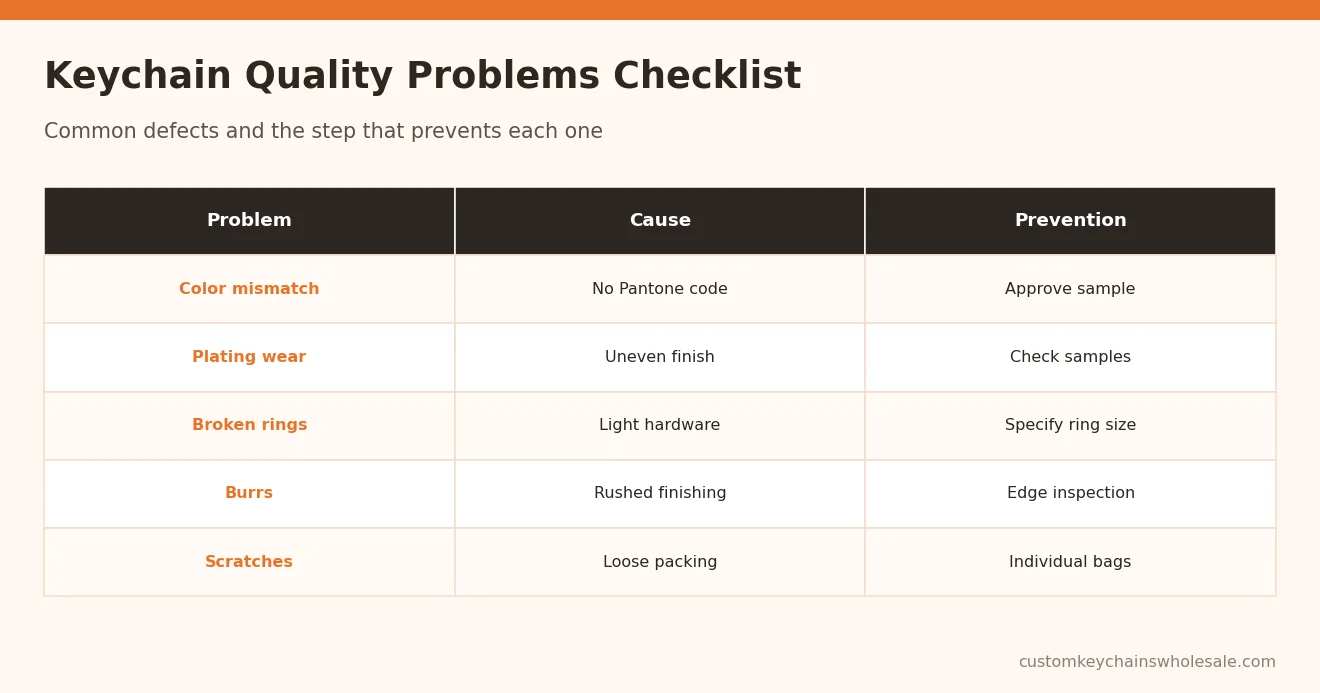
Quick Reference: Problems, Causes and Prevention
Use this table as a checklist when writing your brief or reviewing samples.
| Problem | Common cause | Prevention step |
|---|---|---|
| Color mismatch | No Pantone reference | Provide codes, approve sample |
| Plating wear | Thin or uneven finish | Discuss finish, check samples |
| Broken rings | Hardware too light | Specify ring size, pull-test |
| Misprints | Low-res or unclear art | Vector files, marked print area |
| Burrs / sharp edges | Rushed finishing | Edge check in inspection |
| Enamel defects | Tight color separations | Clear artwork lines, sample |
| PVC flash | Insufficient trimming | Visual check before packing |
| Scratches / size / packing | Unclear specs and packing | Written specs, individual bags |
Prevention Starts With a Clear Brief and Sample
A clear brief prevents most problems before a single piece is made. Include:
- Logo or artwork in vector format with Pantone references.
- Material, target size and thickness.
- Finish, attachment type and ring size.
- Quantity, packaging method and carton requirements.
- Any retail or labeling requirements for your market.
Then approve the free digital mockup and, for large or complex orders, a physical sample. Our guide to digital proofs vs physical samples explains when each is enough.
How to Inspect Custom Keychains Before Shipment
Inspection confirms that bulk production matches the approved sample. A simple approach for buyers:
- Compare random pieces against the approved sample for color, size and finish.
- Check edges, rings and attachments by hand.
- Count units per bag and per carton against the packing list.
- Photograph cartons, carton marks and inner packing before dispatch.
- Record any issues with clear photos so they can be resolved quickly.
For a more detailed checklist, see our article on how to inspect custom keychains. Many buyers also request production photos or videos before the balance is paid, which gives a useful extra check without traveling to the factory.
What to Do If a Quality Problem Appears
Even with good preparation, issues can occasionally appear. A calm, documented approach resolves them faster than a long email chain.
- Separate affected pieces and count them so the scale is clear.
- Take clear photos or short videos next to the approved sample where possible.
- Share batch details, carton numbers and the packing list reference.
- Agree the solution, such as rework, replacement in the next shipment or another arrangement.
- Update the brief or checklist so the same issue does not repeat on reorders.
Keeping a simple record of each order, including approved samples and any issues, builds a useful quality history. When you reorder from the same mold, that history helps both sides focus checks on the points that matter most for your design.
Get a Quote for Custom Keychains Built to Your Quality Standard
Want fewer surprises on your next order? Contact us with your logo, preferred material, quantity and packaging needs, plus any quality points that matter most to you. We will prepare a free digital mockup and a quote, and arrange a physical sample for large or complex orders before mold making and production begin.
Frequently Asked Questions
What is the most common custom keychain quality problem?
Color mismatch is one of the most frequent complaints, because screen colors differ from molded, enamel or printed colors. Providing Pantone codes, approving the digital mockup and checking a physical sample for color-critical orders are the most effective ways to prevent it. Agree acceptable variation with your supplier before production starts.
How can I stop key rings from breaking?
Specify a ring size and wire thickness that suits the weight of your keychain, and avoid very light hardware on heavy metal pieces. Pull-test a few samples by hand and include ring checks in your inspection. For high-use items, ask your supplier which attachment options they recommend for durability.
Should I always order a physical sample?
A digital mockup is often enough for simple, repeat or low-risk designs. For large orders, new molds, complex shapes or color-critical brand items, a physical sample is strongly recommended. It lets you check color, size, finish and hardware in hand before committing to full production.
What should I check when my keychains arrive?
Compare random pieces against the approved sample, check color, size, edges and attachments, and count units per carton against the packing list. Photograph any damaged cartons and defective pieces immediately. Clear photos and quantities make it much easier to resolve issues with your supplier quickly.
Can packaging prevent quality problems?
Yes. Individual poly bags stop pieces rubbing together, which reduces scratches on acrylic and plated metal. Suitable inner packing and strong outer cartons also limit transit damage. Agree packaging details in your brief so they match the shipping method and how the keychains will be sold or distributed.