Biodegradable keychains are products made from materials designed to break down under defined conditions—but “biodegradable” is not a universal guarantee. Buyers should verify the exact material, test method, disposal environment, timeframe, and the treatment of rings, chains, coatings, inks, and packaging before making an environmental claim.
This guide helps promotional-product distributors, brands, event buyers, and gift wholesalers compare lower-impact custom keychain options. It covers recycled, renewable, biodegradable, and durable materials; explains what evidence to request; and provides an RFQ checklist for bulk custom orders.
What Is a Biodegradable Keychain?
A biodegradable keychain is intended to break down through biological activity under specified conditions. The term alone does not explain where degradation occurs, how long it takes, or whether every component behaves the same way. A body material may have one environmental profile while the metal ring, coating, adhesive, ink, or retail packaging has another.
Before describing a product as biodegradable, ask the supplier to identify:
- The material’s exact commercial and technical name
- Whether the claim applies to the keychain body, packaging, or complete assembled product
- The required environment, such as industrial composting, home composting, soil, freshwater, or another controlled condition
- The applicable test standard and issuing laboratory, when available
- The test result, timeframe, limitations, and geographic scope
- Any non-biodegradable rings, chains, coatings, inks, adhesives, or labels
Biodegradable, Compostable, Recycled, and Renewable Are Different
| Term | What it generally describes | What a buyer should verify |
|---|---|---|
| Biodegradable | Breakdown through biological processes under defined conditions | Material, environment, test method, timeframe, and complete-product limitations |
| Compostable | Breakdown under specified composting conditions with defined performance criteria | Industrial or home setting, certification or test report, component coverage, and local disposal access |
| Recycled content | Material containing recovered pre- or post-consumer feedstock | Percentage, chain of custody, supplier declaration, and whether content is independently verified |
| Recyclable | Potential compatibility with a recycling stream | Material combination, local collection, separation requirements, size, coatings, and market availability |
| Renewable | Feedstock replenished through biological processes | Source, land-use considerations, processing, coating, and end-of-life pathway |
| Durable/reusable | Designed for extended use rather than quick disposal | Construction, attachment, finish, repairability, and intended service conditions |
These terms are not interchangeable. For example, bio-based content does not automatically mean a product is biodegradable, and a technically recyclable item may not be accepted by local collection systems.
Material Options for Lower-Impact Custom Keychains
The best option depends on the design, expected lifespan, branding method, destination market, packaging, and evidence available from the supplier. The following are categories to investigate—not automatic claims that every product in the category is sustainable.
Wood and bamboo
Wood and bamboo can provide a natural appearance and support engraving or printing. Buyers should confirm species, source documentation, adhesives, coatings, inks, hardware, moisture sensitivity, and whether a material claim applies to the complete assembled keychain.
Recycled plastic or acrylic
Recycled-content plastics may reduce demand for virgin feedstock, but the recycled percentage and evidence should be specified. Confirm whether the material is pre-consumer or post-consumer, how color and clarity vary, and whether printing, laminates, coatings, or mixed components affect the end-of-life pathway.
For a deeper comparison, review the site’s guide to recycled plastic keychains.
Recycled-content metal
Metal keychains can be designed for long-term use and may contain recycled feedstock. Ask for the alloy, recycled-content basis, plating or coating details, and documentation supporting any percentage claim. Also consider product weight because it can affect freight and packaging.
Bio-based or biodegradable polymers
These materials require especially careful review. Request the resin name, bio-based content if claimed, test conditions, relevant certification, temperature and storage limits, expected service life, and compatibility with the intended manufacturing process. Do not assume a resin-level certificate covers the final printed, coated, or assembled keychain.
Fabric and mixed-material designs
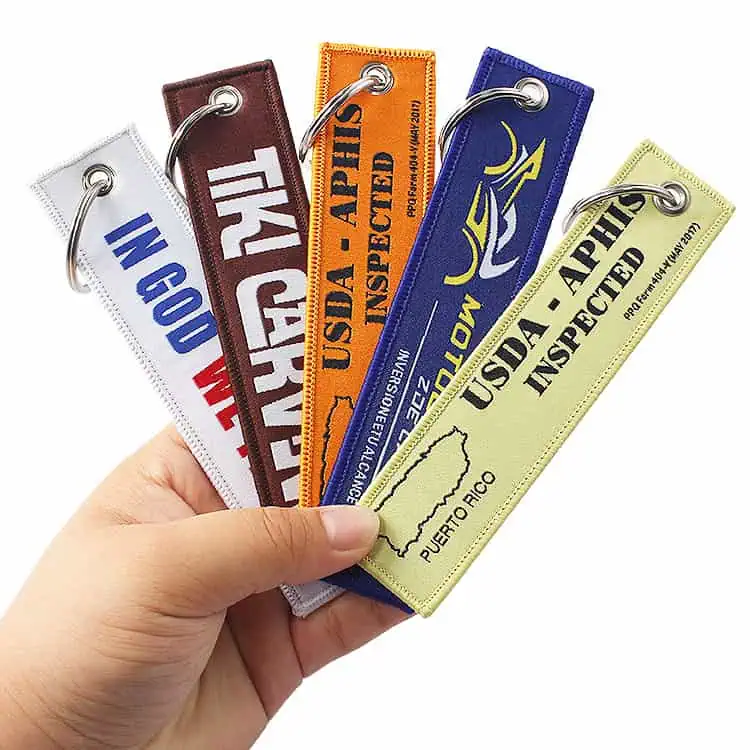
Fabric key tags may use recycled or responsibly sourced fibers, but backing, thread, labels, hardware, and coatings also matter. Mixed materials may improve performance while making separation or recycling more difficult. Ask for a component-level bill of materials when environmental claims are important.
How to Compare Eco-Friendly Promotional Keychains
| Decision factor | Questions for bulk buyers |
|---|---|
| Use case | Is it a short event giveaway, retail product, employee item, or long-life customer gift? |
| Material evidence | What declaration, certificate, test report, or chain-of-custody record supports the claim? |
| Complete product | Which components are covered, and which are excluded? |
| Customization | Do printing, engraving, plating, coatings, adhesives, or colorants change the claim? |
| Durability | Will the product remain useful under the intended handling, moisture, heat, and wear conditions? |
| Packaging | Can unnecessary packaging be removed, reduced, or replaced while still protecting the order? |
| Logistics | How do product weight, carton efficiency, shipping method, and destination affect the total footprint? |
| End of life | Does the destination market have an accessible collection, recycling, or composting route? |
Evidence to Request Before Using Environmental Claims
- Supplier material declaration and component list
- Recycled-content percentage and calculation basis
- Relevant certificate or test report, including scope and expiry date
- Name of the issuing organization or laboratory
- Exact product, resin, batch, facility, or supply chain covered
- Conditions and timeframe associated with biodegradation or compostability
- Explanation of coatings, inks, adhesives, plating, hardware, and packaging
- Artwork and wording approved for the destination market
Avoid broad phrases such as “100% eco-friendly,” “zero impact,” or “completely biodegradable” unless the complete claim is specific, substantiated, and appropriate for the market where the product will be sold. Regulations and accepted claim wording vary by country, so buyers should obtain market-specific legal or compliance advice when necessary.
Designing a Better Bulk Promotional Order
Material selection is only one part of a lower-impact order. A practical project may also:
- Choose a design people are likely to keep and use
- Reduce unnecessary size, thickness, and weight without compromising function
- Use fewer material combinations when separation matters
- Avoid unnecessary individual plastic packaging
- Right-size backing cards, boxes, inserts, and shipping cartons
- Approve artwork and samples carefully to reduce remakes and rejects
- Consolidate designs or shipments when commercially practical
- Provide accurate disposal guidance rather than vague green language
Buyers comparing common conventional formats can also read PVC vs. acrylic vs. metal keychains. This helps separate performance requirements from environmental positioning before requesting alternatives.
RFQ Checklist for Biodegradable or Recycled Keychains
Send enough information for the supplier to assess both production feasibility and claim support:
- Artwork or logo file
- Intended use and destination market
- Preferred material or environmental objective
- Required evidence, certification, or test standard
- Approximate dimensions and thickness
- Colors, print, engraving, coating, or finish
- Keyring, chain, clasp, or other hardware
- Packaging and labeling requirements
- Estimated quantity per design
- Destination country or postal code
- Target delivery date
If you do not know which material to specify, explain the intended lifespan, appearance, budget position, disposal pathway, and claim you hope to make. The supplier can then identify feasible options and state what documentation is available.
For general sourcing steps, see how to buy custom keychains from a China factory. Final material availability, minimum order requirements, pricing, sampling, documentation, production time, and shipping must be confirmed against the actual project.
Bulk Promotion Use Cases for Biodegradable Keychains
Biodegradable and plant-based keychains fit best where the eco message is part of the campaign itself:
- Earth Day, World Environment Day and green campaign giveaways
- Conference and trade show handouts for sustainable brands (see our trade show giveaway kit guide)
- Hotel, resort and eco-tourism souvenirs
- University and school sustainability programs
- Corporate gifts tied to ESG reporting or employee programs
For bulk promotions, the keychain works best as part of a clear message. A short line on the backing card, such as what the keychain is made from, helps recipients understand why the item was chosen. Keep the design simple: one or two colors, a clean logo and a shape that suits the material.
Quantity planning matters too. Leftover stock undercuts an eco campaign, so size the order carefully and add only a small buffer.
Logo Methods by Eco Material
Each eco material takes decoration differently. Choose the logo method early, because it affects cost, MOQ and the final look.
| Material | Best logo methods | Notes |
|---|---|---|
| Bamboo | Laser engraving, UV printing | Engraving needs no ink and gives a natural look |
| Wood | Laser engraving, UV printing | Grain varies, so each piece looks slightly different |
| PLA (plant-based plastic) | Molded logo, printing | Custom shapes need a mold; check heat resistance for your use |
| Recycled plastic | Printing, molded logo | Color range depends on the recycled grade |
| Cork / fabric | Printing, embroidery, woven labels | Soft feel; fine details may need simplifying |
Engraving is usually the most eco-consistent choice for bamboo and wood because it adds no ink. Printing gives more color options, which helps when brand colors are important. For PLA and recycled plastic, a molded logo lasts well but needs a mold, so it suits larger or repeat orders. Our free digital mockup lets you compare options before production.
Packaging for Eco Keychain Orders
Plastic-heavy packaging can weaken an eco message. For biodegradable keychain orders, consider:
- Kraft paper backing cards or paper hang tags instead of plastic headers
- Paper sleeves or small kraft boxes for gift sets
- Bulk packing without individual bags where your channel allows it
- Clear, honest wording about the material, supported by a material declaration from the supplier
Our keychain packaging ideas and eco-friendly keychains buyer guide cover more options.
When you send an inquiry, list the material you prefer, the logo method, quantity and packaging style. If you are unsure which eco material fits your budget and event, describe how the keychains will be used, and we can suggest two or three suitable options with mockups for comparison.
Frequently Asked Questions
Are biodegradable keychains completely biodegradable?
Not necessarily. The claim may apply only to the body material, while the ring, chain, ink, coating, adhesive, or packaging has a different composition. Ask for component-level information and test scope.
Are bamboo keychains biodegradable?
The untreated bamboo component may behave differently from the complete product. Coatings, adhesives, printing, and metal hardware can change the end-of-life profile, so the assembled design must be evaluated separately.
Is recycled plastic the same as biodegradable plastic?
No. Recycled content describes the source of the feedstock; biodegradability describes breakdown under specified conditions. A material may have one attribute, both, or neither.
What proof should a supplier provide for a biodegradable claim?
Request the material name, applicable test method or certification, issuing organization, conditions, timeframe, scope, and identification of every product component covered by the evidence.
Can eco-friendly keychains be customized with a logo?
Many materials support printing, engraving, molding, or other branding methods, but the selected process may affect recyclability, biodegradability, appearance, and documentation. Confirm the complete specification before making claims.
What information is needed for a bulk quote?
Provide artwork, size, material objective, evidence requirements, branding method, hardware, packaging, quantity, destination, and target delivery date. This allows a supplier to assess feasibility and quote on consistent assumptions.
Can I engrave my logo on bamboo or wooden keychains?
Yes. Laser engraving is one of the most popular methods for bamboo and wood because it needs no ink and gives a clean, natural finish. UV printing is also possible when you need color. We send a free digital mockup so you can check logo size and position before production.
What packaging suits a biodegradable keychain order?
Paper-based packaging usually fits best, such as kraft backing cards, paper hang tags or small kraft boxes. If your channel allows it, bulk packing without individual bags reduces plastic further. We can also add barcode labels and carton marks for retail or distribution orders.
Are biodegradable keychains suitable for large event giveaways?
Yes, especially when the event has a sustainability theme. Bamboo, wood and PLA keychains can be produced in bulk with engraved or printed logos. Plan early, since some eco materials depend on availability, and confirm the quantity, logo method and packaging before production starts.